EIT RawMaterials Projects

The ambitious vision of EIT RawMaterials is realised by the creation of a structured collaboration within the Knowledge Triangle, which is the basis of the EIT model.

Call for Innovation & Education Projects is now open!

Learn more

EIT RawMaterials Projects Timeline

392 Projects
Project Portfolio
Innovation Themes
Innovation Areas/Lighthouses

CEMOOC: Circular Economy MOOC: Rationales, Policies and Business Cases for Closing Material Loops in the EU
Objective

The main impact and added value from CE_MOOC is to deliver experience sharing and knowledge to broad EIT RawMaterials audiences, which result in increased societal awareness of raw materials, their importance to our modern economies, and the relevance of KIC activities to broader socio-political stakeholders.

The solution (technology)

Service delivered by the MOOC strategy for such delivery includes that: large audiences can be reached at very low cost per learner in comparison to traditional forms; course replication costs are very low once the MOOC is established; MOOC audio-visual material is creative commons and can be leveraged in other media; updating and renewal is supported, thus longevity and financial sustainability is enhanced. Further, it is anticipated that the intervention will deliver knowledge and motivation to envision, or act upon, new ideas for products, markets, business models, and policy initiatives that further promote material loop closure and the operationalization of a circular economy. The targeted communication and education delivered will provide the EIT RawMaterials with increased visibility, enhanced reputation and legitimacy, (potential) innovation spinoffs, and an increased awareness of the industry among potential employee, project partner, and technology provider pools.

Partnership

For more information, please visit the project web page.

Circular Economy

CERA: Certification of raw materials

Project duration: 2 January 2017 – 31 March 2021
Objective

Instead of contributing to one of the currently existing three lighthouse programs, this project rather adds new major strategic aspects possibly representing a new, not yet established lighthouse program.

These are as follows:

Industrial competitiveness: A main objective of this unified certification program is that European producers and processors of mineral resources as well as end-product manufacturers will undergo the newly developed certification procedures. This is expected to have a long-term positive impact on the international competitiveness of non-European and non-certified producers. Mainly, European producers of mineral resources will benefit from this certification. Also, this certification program will have an impact on non-European deposits located e.g. in Africa and/or South America operated by European producers, such as Rio Tinto and Nyrstar. The Extractive Industries Transparency Initiative (EITI) is limited exclusively to the financial sector of the minerals industry focusing on aspects such as bribery, corruption and tax evasion. Within the solution socioeconomic and environmental aspects, as well as aspects concerning occupational health and safety will be considered, evaluated and improved. The certification scheme to be developed mainly takes into consideration aspects concerning the environment as well as social sustainability. The proposed solution contributes highly to the transparency of market mechanisms and additionally to the reduction of lack of developed institutions. Additionally, the solution offers high potential for new master programs and PhD theses entailing excellently qualified academic offspring.  New skills and IP are expected to be developed/created through the development of a certification framework/scheme by a multinational cooperation of consortium partners. An objective of the proposed solution is to develop an open and transparent system, from which all participants within the KIC can benefit. Moreover, European companies along the value chain of the raw material industry can also profit from the developed EU-label on mineral resources.

The solution (technology)

The development of this unified certification program enables (i) an increased cooperation between partners of the consortium and (ii) new partnerships and cooperation with entities participating in the value chain from production of mineral resources to end consumer. Added value accruing to potential users, companies, or society at large:

Ethical and moral aspects are of major importance and are therefore particularly promoted through the proposed certification system, resulting in possible benefits for the society at large.

Potential growth: The proposed solution offers high potential for start-ups as well as growth of SMEs through the execution of services in auditing and certification processes.

Partnership

For more information please visit the official website of the project.
Mineral Processing/Resource Efficiency

CHARAMBA: Artificial Intelligence for Material CHARActerisation & Real-Time Mass BAlances
Project duration: 1 January 2020 – 31 December 2021

Objective

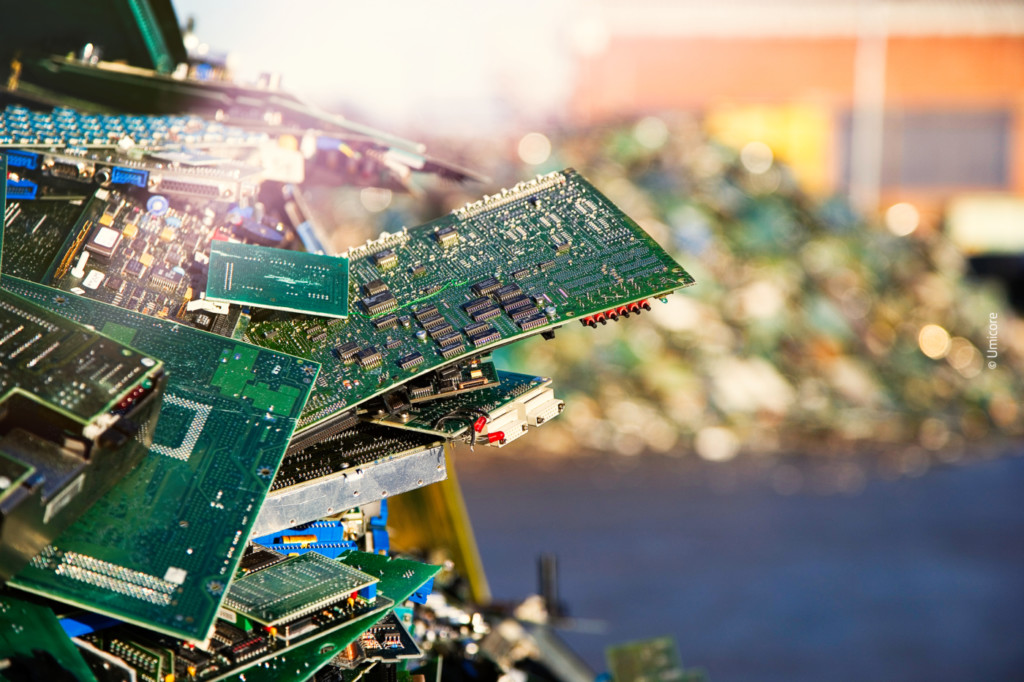
CHARAMBA will upscale an innovative inline-characterisation technology from ‘scan-the-bucket’ to ‘scan-the-truck’. Combining multiple sensors (e.g. XRT and 3DLT) directly measuring physical/chemical properties with artificial intelligence, the value and composition of complex heterogenous material streams can be quantified resulting in cost and time savings for recycling companies compared to current sampling and analysis procedures.

The solution (technology)

Today many recycling companies struggle with the value assessment of complex material/waste streams. The main issues are the costly and labour-intensive sampling procedures and subsequent chemical analysis, leading to long waiting times (often several weeks) and the associated financial uncertainty.

To counter this, VITO initiated the development of an in-line characterisation technology. This way, heterogenous and complex material streams can be assessed completely – eliminating the need for subsampling – and mass-balances can be produced ‘on-the-fly’. In fact, for each material particle a ‘digital twin’ is created which can be further assessed in a virtual way. In this technology, the heterogenous waste particles are dispersed on a conveyor belt as a mono-layer and scanned using X-rays, a 3D laser scanner and a colour camera. Using artificial intelligence, the device recognises the individual particles and assigns several important physical parameters: size, mass, shape, material, texture, etc.

Currently the technology is demonstrated successfully for a handful of streams on the level of relatively small samples, e.g. a few buckets (‘scan-the-bucket’). In the current CHARAMBA proposal, VITO wishes to further mature the technology, i.e. scale it up to an industrial relevant level or, in other words, to ‘scan-the-truck’. The project will focus on two required innovations: (1) a framework to efficiently tailor hardware, software and models to new streams and customer challenges and (2) a performance scale-up of the technology, to deal with industrially relevant throughput and provide stream statistics in real-time.

To take on this challenge, VITO partnered with Ghent University and two industrial partners, Suez and Umicore allowing to showcase the industrial relevance of the new characterisation technology.

After project completion, VITO wishes to introduce the innovative technology as a service to the market and subsequently launch a spin-off company selling tailor-made inline characterisation devices to several players in the metal recycling market.

Partnership

  • Flemish Institute for Technological Research (Lead Partner), Belgium
  • Ghent University, Belgium
  • Suez Treatment & Recycling S.A., Belgium
  • UMICORE NV, Belgium
Learn more about CHARAMBA project on the official web page and on the VITO product page.
Recycling

CirclELab: Circular Economy Laboratory

Project duration: 1 January 2020 – 31 December 2020

Objective

The project aims to show to 10-18 years old students, and their teachers, the main characteristics of Circular Economy: what is possible to do with wastes, and where materials are usually recycled even in the industrial sector.

The solution (technology)

A new methodology is proposed based on disruptive toolkits that allow students to experience a recycling process with their hands. Also a toolkit consisting “from waste to product” examples will be developed.

Partnership

  • Gomez Pardo Foundation, Spain (Lead Partner)
  • Université de Liège, Belgium
  • Consiglio Nazionale delle Ricerche (CNR), Italy
  • Commissariat à l’énergie atomique et aux énergies alternatives, CEA (French Alternative Energies and Atomic Energy Commission), France
  • Bay Zoltan Nonprofit Ltd. for Applied Research, Hungary

For more information, please visit the project website.

Circular Economy

CIRCU-CITY: Circular Cities Summer Camp

Project duration: 1 January 2020 – 31 December 2021

Objective

In a 5-day summer camp hosted by different European cities, multidisciplinary student groups are trained and challenged to develop novel solutions for sustainable circular cities, with a strong focus on the role of raw materials in the transition to green mobility, renewable energy, and the digital society.

The solution (technology)

The summer camp consists of a series of interactive lectures given by experts in the field, a field visit, a board game, and a 2-day tournament.

Partnership

  • Ghent University, Belgium (Lead Partner)
  • Erion, Italy
  • Mineral and Energy Economy Research Institute of the Polish Academy of Sciences (MEERI), Poland
  • Mondragon Goi Eskola Politeknikoa S. COOP. (MGEP), Spain

For more information, please visit the project web page.

Circu-MAT: Circular City & Industry park MATerials Metabolism Learning Package & Assessment Tool

Objective

The project develops a sophisticated blended learning toolbox allowing actors at the level of cities, city regions & industrial parks to assess in a simple way how a closed-loop materials metabolism can be created at local scale, and assess the environmental and economic benefits of local and regional circularity options. It supports the possible EITRM Lighthouse program on a circular industry and circular cities.

The solution (technology)

In 3 course blocks of 2 days each course participant will learn to work with an interactive tool that allows them to identify city or industrial park specific circularity options. They further will be able to assess the environmental and economic benefits of local and regional circularity options. The project supports the possible EIT RM Lighthouse programmes on a circular industry and circular cities.

Partnership

For more information, please visit the project web page.


Circular Economy

CIRCuIT. CIRcular CIties Transition needs – Transition to circular cities

Project duration: 1 July 2019 – 31 December 2019

Objective

The CIRCuIT innovation project will deliver:

  • Identification of gaps and needs of cities
  • Drafting strategy to overcome the identified needs and gaps

The project will:

  • Analyse the existing data and documents, pointing out the relevant themes for the transition towards circular cities
  • Collect feedback from stakeholders collaborating in other project/initiatives with project consortium, through existing data and at least one dedicated workshop, inviting experts with particular focus on cities/local administration representatives
  • Ranking the collected factors that enable (or hamper) the implementation (transition) to circular practices in cities

The solution (technology)

A major outcome of the project will be a ranking list of factors, technological developments as well as “transversal factors” such as legal, promote collaboration (vs competition), knowledge transfer, data/digital (as an accelerator of c.e.), governance.

Overall project strategy will address important topics for urban areas (Waste prevention and management; Urban water management and reuse; Urban mining; New business models; Building; Citizen awareness).

Furthermore, it will contribute to defining a preliminary strategy to overcome needs and gaps for the transition toward circular cities, contributing to:

  • Funnelling synergies and expertise already existing
  • Identifying future challenges and developing the ability to address them

Partnership

  • Agenzia Nazionale per le Nuove Tecnologie, l’Energia e lo Sviluppo Economico Sostenibile (ENEA), Italy (Lead Partner)
  • Fundación Tecnalia Research & Innovation, Spain
  • Vlaamse Instelling voor Technologisch Onderzoek NV (VITO), the Netherlands
Substitution

CIRCULAR-TP: Composite based multi-material parts designed for circular economy

Project duration: 1 January 2019 – 31 December 2021

Objective

The increasing drive to reduce the weight of vehicles has resulted in the gradual replacement of dense ferrous metals by lower density materials, like plastics and short-fibre reinforced plastics. Today, plastic materials represent 12% to 15% of the weight of a car and this number has remained stable for many years. A further very significant weight reduction is rendered mandatory by the new EU or other regulations on Green House Gas emissions, which can only be achieved by massively substituting today’s steel by lighter weight materials in the car body structure and powertrain.

The solution (technology)

The CIRCULAR-TP project aims at developing cost-effective, light-weighting materials and technologies that will allow the European automobile manufacturers to introduce light-weight solutions in existing plants in the short- to mid-term. The main objectives of the project are to scale-up the production of thermoplastics reinforced with continuous carbon or glass fibre, and to develop production tools and processes that will allow the combination of very thin steel sheets with such thermoplastic composites. This approach shall lead to metal/hybrid composites with expected weight losses of 30% compared to pure steel while allowing a fast implementation in the existing car manufacturing processes. At the same time, this technology shall help to reduce production waste by as much as 90% compared to current thermoset or organosheet composite solutions.

Partnership

  • Arkema France, France (Lead Partner)
  • Agenzia Nazionale per le Nuove Tecnologie, l’Energia e lo Sviluppo Economico Sostenibile (ENEA), Italy
  • CANOE ADERA, France
  • Centro Ricerche Fiat S.C.p.A. (CRF – C.R.F.), Italy
  • Fraunhofer-Gesellschaft zur Förderung der angewandten Forschung e.V. (Fraunhofer), Germany
  • Fundación Tecnalia Research & Innovation, Spain
  • Idertia Soluciones Industriales, S.L., Spain
  • Technische Universiteit Delft (Delft University of Technology), Netherlands
Recycling

CircularSerbia: Benefits from cooperations between EU recycling sector and Serbian industry

Project duration: 1 January 2018 – 31 March 2019

Objective

The project will support a regional system of innovation in Serbia and other Western Balkan countries. Building upon ongoing projects it will bring together business partners, education and research institutions in Serbia with European institutions.

The solution (technology)

The project includes a study visit, a feasibility study for a Circular Economy strategy and a networking event in Serbia. It addresses a clearly identified transformation need in the East and Southeast European (ESEE) region.

CircularSerbia will bring together key stakeholders for a circular economy from Serbia, other Western Balkan countries with their European counterparts in order to enable the exchange of information and good practices. It will also integrate experts from the business sector, research and higher education for a so-called regional system of innovation. A key element of the project will be a study tour for selected experts for which meetings in Europe will be organized.

Based on these experiences, the participants will analyze options for the implementation of a circular economy strategy in Serbia. The final step of the project will be a networking event in Belgrade that specifically aims to support the cooperation between Serbia and its neighbor countries.

Partnership

  • Wuppertal Institute, Germany (Lead partner)
  • Chamber of Commerce Serbia, Serbia
  • GIZ Serbia, Serbia
  • Rheinisch-Westfaelische Technische Hochschule Aachen, RWTH Aachen, Germany
  • Delft University of Technology, Netherlands
  • University Union-Nikola Tesla, Serbia
  • Western Balkans Consulting, Serbia