EIT RawMaterials Projects

The ambitious vision of EIT RawMaterials is realised by the creation of a structured collaboration within the Knowledge Triangle, which is the basis of the EIT model.

Call for Innovation & Education Projects is now open!

Learn more

EIT RawMaterials Projects Timeline

392 Projects
Project Portfolio
Innovation Themes
Innovation Areas/Lighthouses

REMANPATH. Building Lifelong Education Through Finding Company Path to Remanufacturing
Project duration: 1 January 2018 – 29 February 2020

Objective

To enhance Europe’s remanufacturing rate from its level of only 2%, recommendations about actions for SMEs have been idenitified by previous projects. Based on these, this proposal will develop an educational package for remanufacturing as well as hold 10 workshops with SMEs in five countries. Already 12 SMEs have signed letters of intent to participate. The aim is to support the SMEs plan their own development paths to remanufacturing.

The solution (technology)

Governments are advocating the transition to a more sustainable use of natural resources. Natural resources such as materials and energy are required to produce products. There therefore needs to be practical strategies to handle products, and the resources that comprise them, at the product’s end-of-life. The so called 6R end-of-life strategies are to do this are to reduce, reuse, recycle, recover, redesign and remanufacture. Remanufacture is the focus of this particular project.
This project is motivation by the fact that Europe only remanufactures 2% of products today, yet we can easily increase this significantly in the near future. To make that increase possible however requires developing the competences of companies, particularly small-to-medium-sized manufacturing firms.

This project aims to develop, pilot and hold educational courses for people who work in small and medium sized firms. The aim of the course is for people to identify their firm’s own competence development paths, and devise innovative business models, which involve the firm remanufacturing products into something new and valuable. It is intended to make the education attractive and relevant by enabling people and experts to interact and share experiences as well as using online tools and gamification.

The European Remanufacturing Council is committed to support this initiative, and 12 firms are prepared to participate in a pilot of the education course. The pilots will be held in five countries, the lessons learned will be assessed and the courses refined. Then the courses will be held again. The project will also plan a way of making sure the courses can be held after this project is completed.

The education approach is collaborative, participatory and constructive, utilizing interaction and sharing experience as well as the online interaction and gamification. The main idea that people working in companies can increase their understanding best through linking the learning to their experience and sharing this experience with other industry people. The learning material is built not only to be used individually but also as the basis for collaborative activities like workshops.

Partnership

  • Teknologian tutkimuskeskus VTT (Technical Research Centre of Finland Ltd. VTT), Finland (Lead Partner)
  • Coventry University London, the UK
  • Digital, Internet, Materials & Engineering Co-Creation (DIMECC), Finland
  • Institut polytechnique de Grenoble (Grenoble Institute of Technology, INP), France
  • Oakdene Hollins, the UK
  • Technische Universiteit Delft (Delft University of Technology), the Netherlands
  • Wuppertal Institut fuer Klima, Umwelt, Energie GmbH (Wuppertal Institute), Germany

For more information, please visit the project web page.

Mineral Processing/Resource Efficiency

RENEW: Re-cycling of Epoxys from Nonferrous E-Waste
Project duration: 1 January 2022 – 31 December 2024

Objective

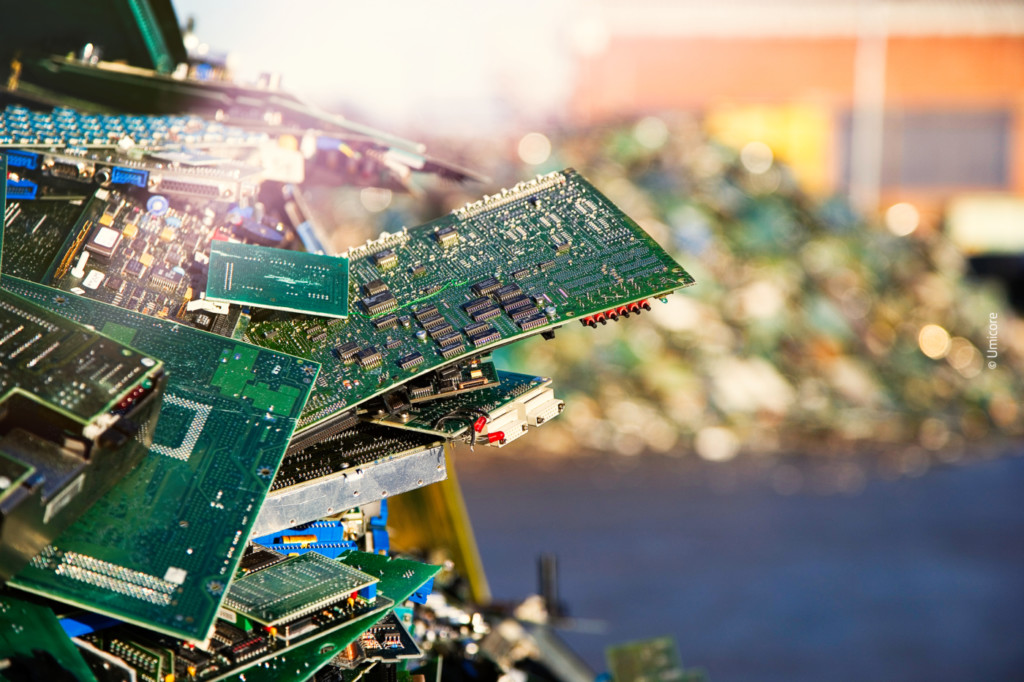
The project aims to validate a technology for the epoxy separation and valorisation from the Printed Circuit Boards (PCBs). The technology will facilitate the raw materials and critical raw materials recovery in the recycling furnaces of copper smelters and WEEE recyclers, increasing the recycling rates in EU.

The solution (technology)

The Printed Circuit Boards (PCB) contain significant amounts of recoverable critical metals such as Cu, Au, Ag, Pd, and Pt. However, recycling PCBs presents some issues because of the high content of epoxy and the content of bromine, harmful to the environment and health.

The majority of copper smelters processing WPCBs (PCB Waste) feed the recycling furnace with the WPCBs including its epoxy content. Some others pyrolyse the WPCBs, which evaporates the organic fraction in order to be recovered and used for energy production.

RENEW project goes one-step further and aims to validate a technology for the epoxy separation that facilitates the Raw and Critical Materials (RM & CRM) recovery in the recycling furnace while the epoxy from the PCBs is valorised and used for chemical recycling.

This project will lead to:

  • Increase of the concentration of metals in recycling furnace’s input material
  • Increase the value of the recycled PCBs
  • Reduction of the PCBs recycling process CO2 footprint
  • Valorisation of the epoxy

End-users for the technology are Electric and Electronic Equipments Waste (WEEE) recycling companies that commercialises recycled PCBs, and copper smelters that recycles non-ferrous metal fraction from WEEEs to recover critical metals (Cu, Au, Ag, Pt, Sn, Ni).

Partnership

  • Atlantic Copper, Spain (Lead Partner)
  • ERION, Italy
  • Fraunhofer-Gesellschaft zur Förderung der angewandten Forschung e.V. (Fraunhofer), Germany
  • Katholieke Universiteit te Leuven (KU Leuven), Belgium
  • Tallinn University of Technology (TalTech), Estonia
  • TREEE Srl, Italy

Learn more about the project here.

Recycling

ReProSolar: Demonstrator of High Grade PV Recovery Value Chain in Europe

Project duration: 1 February 2021 – 31 January 2025

Objective

Led by Veolia Germany and composed of public and private partners covering the key steps along the PV-module recycling value chain, the ReProSolar project aims at demonstrating a highly efficient and dedicated industrial scale process to recycle EoL (end-of-life) PV-modules by implementing innovative technologies. The recycled raw materials, including highly pure silicon, silver, and glass, will be reintegrated in related industries.

The solution (technology)

Today, urgent action on a global scale is needed to reduce carbon emissions and mitigate the consequences of climate change. It is believed that renewable energy and energy efficiency measures have the potential to achieve up to 90% of the required decarbonisation targets. Among all the renewable energy sources, photovoltaics (PV) has recognised the highest growth rate, with a Compound Annual Growth Rate (CAGR) of 36.8% between year 2010 to 2018 worldwide. In 2018, Europe’s share in the total cumulative PV installations amounted to 25%. With the successful exploitation of the PV systems during the last decades, the first installed batch of solar modules are reaching their life-time which is usually between 20 to 25 years depending on the power loss. A proper management of the end-of-life (EoL) modules will be the key to reduce this hazard waste and to conserve the precious raw materials composing the PV modules, in order to render the PV industry from a linear to a circular economy.

The present project ReProSolar, led by Veolia Germany and composed of innovative deeptech startups, world-leading specialty chemical company, and renowned research institutions on materials and environment, aims at realizing a highly innovative industrial process for recycling EoL Silicon-based PV modules in order to revalorize all the contained precious raw materials, including copper, aluminium, silver, silicon, and glass. An entire integration of innovative technologies for revalorising EoL PV modules, including delamination and raw material purification with highly added values, as well as waste stream supply chain and reintegration into different industries, will be realized during the project, covering in Europe the entire value chain from waste to raw materials.

Furthermore, by demonstrating the industrial viability through the construction and regular operation of a first industrial line of its kind with a nominal annual capacity of 5,000 ton of decommissioned PV modules, ReProSolar will also answer three essential challenges regarding the closure of PV value chain, respectively economic, environmental, and societal.

Partnership

  • Evonik Operations GmbH, Germany
  • FLAXRES GmbH, Germany
  • TECNALIA Research & Innovation, Spain
  • Grenoble Institute of Technology (INP), France
  • Rosi, France
  • Triade Electronique, France
  • Veolia Deutschland GmbH, Germany
  • Veolia Recherche & Innovation (VERI), France
  • Veolia Umweltservice GmbH (Lead Partner), Germany
Exploration

RESEERVE: Mineral potential of the Eastern and South-Eastern Europe region

Project duration: 1 April 2018 – 30 June 2021

Objective

RESEERVE is mapping the mineral sources of the six ESEE countries: Albania, Bosnia and Herzegovina, Croatia, Serbia, Montenegro and North Macedonia, currently not included in the existing data platforms. The main project outcome is the creation of the West Balkan Mineral Register for primary and secondary mineral resources. The register will be a starting point to integrate the region into pan-European Minerals Intelligence Network and bring it closer to the common minerals market.

The solution (technology)

The RESEERVE project is presenting the first step in the implementation of the EIT RawMaterials RIS strategy to establish fruitful collaboration amongst countries where there are no EIT RawMaterials partners yet, to extend the geographical reach to ESEE region through the following achievements:

  • Created West Balkan Mineral Register for primary and secondary mineral resources by mapping the mineral resources of the West Balkan countries: Croatia, Bosnia and Herzegovina, Serbia, Montenegro, North Macedonia and Albania, which are currently not included in the existing data platforms.
  • Created ESEE mineral community to determine available and further needed information on primary and secondary mineral resources data in West Balkan countries.
  • Increased capacity of West Balkan countries for management of mineral resources on a national level.
  • Ensured sufficient flow of information on mineral resources for Europe’s industry to expand their business and investments in the West Balkan region.
  • Transferred knowledge of EIT RawMaterials partners to the West Balkan region with the purpose to develop new markets for modern technologies, create opportunities for start‐ups and SMEs, contribute to new jobs opportunities and generate economic added value in the field of mineral resources.

Partnership

  • Geological Survey of Slovenia (GeoZS), Slovenia (Lead Partner)
  • DMT GmbH & Co. KG, Germany
  • National Technical University of Athens (NTUA), Greece
  • University of Zagreb – Faculty of Mining, Geology and Petroleum Engineering, Croatia
  • Montanuniversität Leoben, Austria
  • Bureau de Recherches Géologiques et Minières – BRGM (The French Geological Survey), France
  • Geological Survey of Denmark and Greenland (GEUS), Denmark
  • Croatian Geological Survey, Croatia
  • Geological Survey of Albania, Albania
  • Geological Survey of Montenegro (GSM), Montenegro
  • University of Belgrade – Faculty of Mining and Geology, Serbia
  • Geological Survey of the Federation of Bosnia and Herzegovina, Bosnia and Herzegovina
  • Macedonian Ecological Society, North Macedonia
  • Geological Survey of the Republic of Srpska, Bosnia and Herzegovina

Learn more about RESEERVE and the West Balkan Mineral Register of primary and secondary raw materials on the project website.

Recycling

ResiduFlex: infrastructure and technology network on residue valorisation

Project duration: 1 January 2016 – 31 December 2018

Objective 

ResiduFlex unites partners with strong expertise and infrastructure in metallurgical residue valorisation/mineral matrix conversion, i.e. the major volumetric fraction to (construction) materials by making a broad variety related technologies more easily accessible throughout Europe, and by offering a more diverse range of solutions compared to what partners may achieve separately (e.g. substitution of cement with by-products, carbonated products, inorganic (alkali activated) polymers, upgraded soil…). The ResiduFlex Network has the overall aim to increase the number of residues that can be treated by proving the feasibility on the lab scale as well as to detecting opportunities for upscaling, and to enhance the recovered/generated value.

The solution (technology)

The ResiduFlex Network is part of a more holistic ZeroWaste umbrella network targeting the extraction of valuables from low grade, complex wastes and ores, while upcycling the residues to added value products. ResiduFlex aims to reach its objectives by building a network of expertise and infrastructure in residue treatment-valorisation. For this reason, a system to simplify cooperation within the network, and provide services to outside customers will be developed and installed. This service will be offered in the first instance in the partner countries and involved CLCs, targeting both the owners/producers of residues, as well as the producers of solution materials (e.g. construction industry). The identification of the legislative barriers for residue valorisation within the Network and EIT RawMaterials partners’ countries and the mapping of the residue streams and stocks at partners’ level will be investigated. To strengthen and expand the network, the detection of common project opportunities for KCA and KAVA will be pursued.

Partnership

For more information, please visit project website.

Recycling

ReSiELP: Recovery of Silicon and other materials from End-of-Life Photovoltaic Panels

Project duration: 1 April 2017 – 31 March 2020

Objective

Millions of Photovoltaic Panels (PV) modules have been installed worldwide over the past three decades without implementation of a circular value-chain by now. In order to keep the containing critical and precious metals in the loop, RESIELP brings together technologies from different fields to recover and purify critical and precious raw materials (Si, Ag) as well as by-product materials (glass, Al, Cu) in an environmentally friendly and circular economic process with a product-centric zero-waste approach.

The solution (technology)

The project involves several industrial partners, ready to push the technology to market within 3 years after the end of the project, when the EoL PV market starts to grow fast. TRL 7 will be reached at the end of the project (beginning of 2020) and TRL 9 within another 3 years (2023), when the European market growth start is expected. Added value is represented by multiple potential end users, inside and outside PV value chain, making the pilot case a great example of circular economy demonstrator.

Partnership

  • Commissariat à l’énergie atomique et aux énergies alternatives, CEA (French Alternative  Energies and Atomic Energy Commission), France (Lead Partner)
  • Agenzia Nazionale per le Nuove Tecnologie, l’Energia e lo Sviluppo Economico Sostenibile (ENEA), Italy
  • Bay Zoltan Nonprofit Ltd. for Applied Research, Hungary
  • Centro di Ricerche Europeo di Tecnologie, Design e Materiali (CETMA), Italy
  • I.T.O. srl, Italy
  • Magyarmet (MAGY), Hungary
  • PROJEKTkompetenz.eu – Gesellschaft für Projektentwicklung und management m.b.H. (PROKO), Germany
  • Relight S.R.L., Italy
  • Università degli Studi di Padova (University of Padova), Italy

For more information, please visit the official website of the project.

ReUK: Bridging the raw materials knowledge gap for reuse and remanufacturing professionals

Objective

The role of reuse and preparation for reuse in a circular economy has been significantly strengthened by the five-step waste hierarchy that now clearly states that reusing ore remanufacturing of products should be preferable over all kinds of recycling. Nevertheless, there are still a variety of relevant barriers and uncertainties for reuse and related innovative business models. Therefore, the project ReUK will develop life-long education services tailor-made for the needs of the reuse- and remanufacturing sector in Europe in order to reduce the demand for raw materials in Europe. Reuse and remanufacturing offer significant economic and environmental potentials for Europe which so far are widely untapped, especially with regard to knowledge gaps and services to overcome them.

The solution (technology)

The lifelong education services developed under ReUK will take the form of workshops that can be given online (webinar) or integrated into existing physical attendance-courses. Supported by the developed material, professionals should learn:

  • how to identify opportunities for reuse and remanufacturing;
  • how to test if a product/groups of products can be reused or remanufactured, from a design, logistics and business perspective;
  • how to develop a reuse and/or remanufacturing business.

The development of lifelong education services will be achieved through:

  • mapping of relevant stakeholders and setting up of an institutional framework for cooperation in order to bring together expertise from fields of reuse and remanufacturing;
  • identification of knowledge gaps.

The targeted end-customers are experienced professionals from the whole product and waste value chain and include professionals of companies, who see opportunities to reuse or remanufacture, and waste professionals from the public and private sector, who want to increase the reuse of specific waste streams.

Partnership

Substitution

REVALUE: REcycled carbon fibres for high VALUE composites

Project duration: 1 April 2017 – 30 September 2019

Objective

The goal of the project is the scaling up of the process for the recycled carbon fiber surface modification and thermoplastic compound manufacturing, thus leading to high performance eco-innovative composite materials. By the optimization of the RCF surface modification process and of the compounding process, carbon fiber reinforced thermoplastics will be available for the automotive market, having properties similar to those of the virgin carbon fiber reinforced compounds, but with 75% fiber cost saving. The consequences will be a wider use of carbon fibers in automotive components, with a clear advantage in terms of automotive lightening.

The solution (technology)

The main environmental impact of the project is linked to the minimization of the pollution due to the carbon fiber manufacturing. The global carbon fibres demand is expected to grow at an annual rate of 10%, reaching 89kton in 2020. About 30% of the manufactured carbon fibres becomes industrial scrap. Moreover, current methods for manufacturing new carbon fibres are very energy intensive, while producing Recycled Carbon Fibres (RCF) by pyrolysis requires only 1/10 of the energy as compared to new carbon fibres. The project will foster a massive use of recycled carbon fibers, providing a clear advantage in terms of reduction of landfill waste and CO2 emissions. Another important environmental impact is relevant to the significant contribute that will be provided to solve the impelling need to reduce the CO2 emissions of the vehicles. The vehicles weight reduction is an immediate way to reduce the CO2 emissions, letting the reduction of fuel consumption.

Partnership

  • Agenzia Nazionale per le Nuove Tecnologie, l’Energia e lo Sviluppo Economico Sostenibile (ENEA), Italy (Lead Partner)
  • Centro di Ricerche Europeo di Tecnologie, Design e Materiali (CETMA), Italy
  • Centro Ricerche Fiat S.C.p.A. (CRF – C.R.F.), Italy
  • Commissariat à l’énergie atomique et aux énergies alternatives, CEA (French Alternative  Energies and Atomic Energy Commission), France
  • SUEZ Groupe SAS, France
  • Universita del Salento – Dipartimento Ingegneria dell’Innovazione, Italy
Sustainable Mining

ReviRis: Revitalising Post-Mining Regions: Problems and Potential in RIS Europe

Project duration: 01 January 2020 – 31 December 2021

Objective

ReviRis is an evaluative toolbox for decision-makers. The project contextualizes current practices in civic engagement and decision-making focusing on involvement, and engagement of different actors and stakeholders in the planning and design process in the revitalization of post-mining land.

The solution (technology)

The key is the active participation and the extension of the Social Licence to operate through mine closure and site rehabilitation and for them to play an active role in the ultimate post-mining landscape and land use.

Partnership

  • Tallinn University of Technology, Estonia (Lead Partner)
  • Universidade Nova de Lisboa (New University of Lisbon) – Faculty of Sciences and Technology (FCT NOVA), Portugal
  • National Technical University of Athens – NTUA, Greece
  • Montanuniversität Leoben, Austria
  • KGHM Polska Miedz Spólka Akcyjna, Poland
  • ECHMES Ltd., Greece
  • AMPHOS21 Consulting SL, Spain
  • AGH University of Science and Technology, Poland

For more information, please visit the project web page.