EIT RawMaterials Projects

The ambitious vision of EIT RawMaterials is realised by the creation of a structured collaboration within the Knowledge Triangle, which is the basis of the EIT model.

Call for Innovation & Education Projects is now open!

Learn more

EIT RawMaterials Projects Timeline

392 Projects
Project Portfolio
Innovation Themes
Innovation Areas/Lighthouses

Exploration

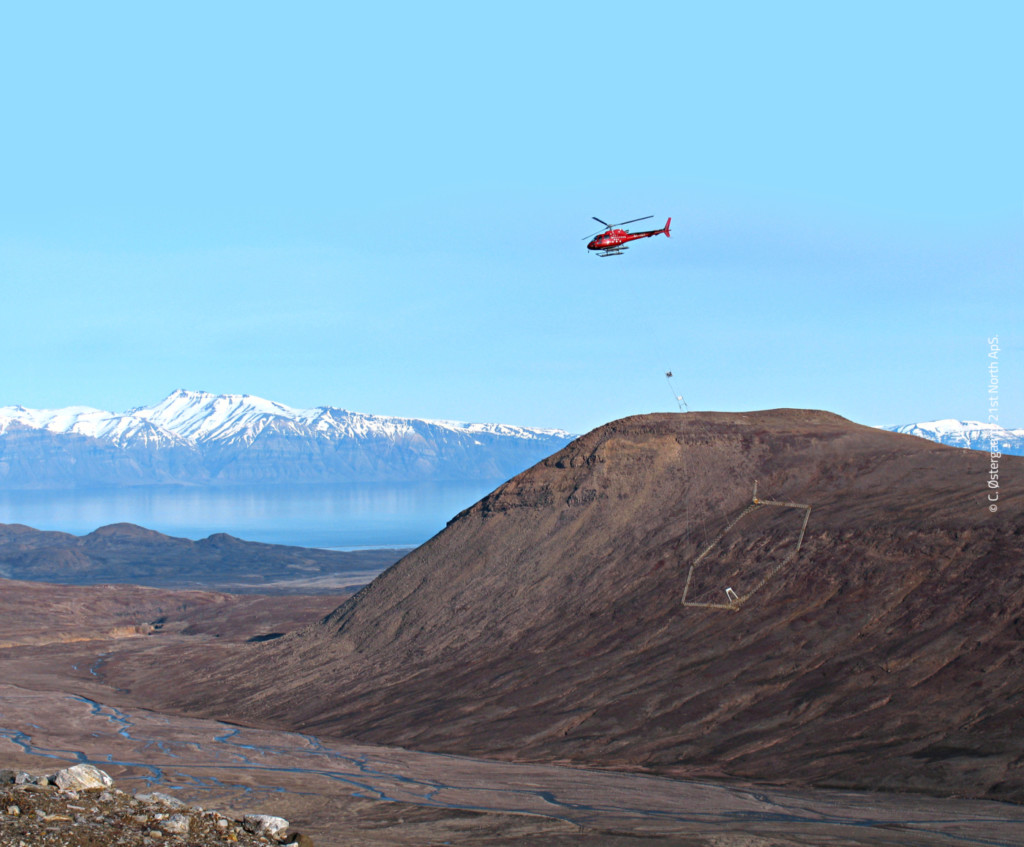
Alliance of RawMaterials lifecycle with Copernicus and Remote Sensing techniques

Project duration: 1 July 2022 – 30 June 2024

Objective

A crucial challenge for the transition to a carbon-neutral economy is the high demand for mineral resources. In addition, embracing circularity and reducing the environmental impacts lead to a focus on developing and using advanced tools to improve mineral resource management, both technologically and economically. Earth observation (EO), specifically the Sentinel satellites of the Copernicus program, come into play. Many satellite types (multispectral and hyperspectral), are commonly used in different sectors such as agriculture and climate, however, there is a big gap for mineral resource exploration and management.

The solution (technology)

RawMatCop Alliance is the pertinent kit to transform the advanced scientific knowledge integrated with the industrial expertise to fill this gap.

Partnership

  • Alma Mater Studiorum – Universita di Bologna, Italy (Lead Partner)
  • Luleå University of Technology (LTU), Sweden
  • Agencia Estatal Consejo Superior de Investigaciones Cientificas M.P., CSIC (Spanish National Research Council), Spain
  • Université de Liège, Belgium
  • Novojy SPRL, Belgium

For more information, please visit the project web page.

Substitution

RawMaterials4E-Energy: Raw Materials Solutions for E-Energy Technologies in the European Mobility Industry

Project duration: 1 January 2016 – 31 December 2018

Objective

The mobility industry with its various suppliers in the field of basic materials, process technologies, and recycling facilities is a figurehead for European industry and the core of innovation. This industry strongly depends on the supply of critical raw materials contained in the different parts of the vehicles, e.g., precious metals or rare earth elements in (i) energy converters as e-engines, e-generators, fuel cells, and solar cells and (ii) energy storage components like batteries and supercapacitors.

The solution (technology)

Jointly organized under the lighthouse project Raw material solutions for a sustainable European mobility industry, the NoI E-Energy will focus on critical materials related to energy conversion and storage in the mobility industry. Coordinated by a single-point-of-contact the NoI covers with its members each vertex of the knowledge triangle, wherefore there is a well-balanced partner structure with leading partners from industry (Mondragon, Arkema, Heraeus, Umicore), applied research organizations (Fraunhofer, CSIC, CEA) and universities (Ghent University, TU Darmstadt, Grenoble-INP, KU Leuven, University of Bordeaux). Partners in the consortium will provide to future customers outstanding analytical tools from an early stage of the innovation process up to pilots and even infrastructure on an industrial scale (high TRL) all along the materials value chain.

Partnership

  • Fraunhofer-Gesellschaft zur Förderung der angewandten Forschung e.V. (Fraunhofer), Germany (Lead Partner)
  • Agencia Estatal Consejo Superior de Investigaciones Cientificas, CSIC (Spanish National Research Council), Spain
  • Arkema France, France
  • Commissariat à l’énergie atomique et aux énergies alternatives, CEA (French Alternative  Energies and Atomic Energy Commission), France
  • Ghent University, Belgium
  • Heraeus Holding GmbH / Heraeus Deutschland GmbH & CoKG, Germany
  • Institut polytechnique de Grenoble (Grenoble Institute of Technology, INP), France
  • Katholieke Universiteit te Leuven (KU Leuven), Belgium
  • Mondragon Corporation S. Coop., France
  • Technische Universität Darmstadt, Germany
  • UMICORE NV, Belgium
  • Université de Bordeaux, France
Substitution

RAWMATS-4-POWERTRAIN – Raw Material Solutions for the European Powertrain Industry

Project duration: 1 January 2016 – 31 December 2018

Objective

The main goal is to set up collaborations and offer infrastructure access between partners at high TRL that master all the parts of the value chain aiming to the definition of innovative and cooperative projects that will boost the introduction of novel raw materials into the automotive industry. This includes lightweight materials for mass reduction and increased performances.

The solution (technology)

The overarching goal of the networking activities is the establishment of strong long-lasting cooperation between the 2 types of infrastructures (scientific & industrial), making use of already existing knowledge from all partners being a member of this NoI and compiling a broad service portfolio.

Partnership

Sustainable Mining

RE-ACTIVATE: Developing superior technical infrastructure throughout EIT RawMaterials community to foster technologies and methodologies for re-activation of former mine sites
Project duration: 1 April 2017 – 31 March 2020

Objective

The project objective is to establish a Network of Infrastructure (NoI) of experts throughout EIT RawMaterials community, developing superior technical infrastructure to create synergies to merge and further develop advanced technologies and methodologies for re-activation of former mine sites. The NoI will also be the single point of contact for any relevant expertise in the particular fields.
Establishing the proposed NoI will achieve the following main goals:
  • developing superior technical infrastructure to foster technologies and methodologies for re-activation of former mine sites, easy access for the targeted audience to all relevant information through a single point of contact, because all excellence in re-activation of former mine sites with highest quality expertise for all project phases is visible and available, innovative methodology for re-activation of former mine sites will be described;
  • all available best practice technologies are known and evaluated;
  • demand for further development and innovation is described, creation of project proposals for future developments and innovation in all relevant and applicable technologies for re-activating former mine sites (e.g. KAVA upscaling projects), submit project proposals to the relevant call in Horizon2020. Applying for related projects, e.g. in programmes like Horizon2020, INTERREG, making best practice examples available, both on technical, legal (mineral policies, permitting and regulatory and administrative procedures, transparency), economic (including taxes) and environmental solutions for every phase of re-activation project, raising common awareness and understanding promotion among general public, decision makers and experts as well as increasing information/knowledge on the role of minerals in everyday life and impact of mining industries on countries economic development, supporting stakeholders on different levels (EU, member states, regional) in updating legal regulations and standards, development of innovative communication strategies with all stakeholders of re-activation projects, in particular authorities and society, collaboration with other KIC activities, e.g. wider society learning, collaboration with other KICs, collaboration with other organizations, stimulating investment by reducing risk of new investment in re-activation projects in Europe-an countries and by attracting different stakeholders, supporting stakeholders providing new links to geo-resources related infrastructures (hardware, databases, etc.) obtained, archived and made accessible through other European supported initiatives, e.g. EPOS (www.epos-ip.org).

The solution (technology)

The participating partners are covering the major regions with relevant potential for projects in Europe and the main target region for the proposed ser-vices is also Europe. So, the NoI will be able to deliver a clear impact in securing raw materials supply within Europe. As a major impact, the NoI work will stimulate investment by reducing the risk for new investment in re-activation projects in European countries and by attracting different stakeholders.However, the European example, covering first class standards, can be expanded to all raw material regions of the world; to the benefit of all stakeholders in raw materials projects, like raw material companies, responsible authorities and the society, represented by NGOs, interest groups (e.g. environmental, first nations, cultural hesitates), local or regional agencies) or single persons.For further detailed description of the project background, objective, scope, needs and impact please refer to the complementary PDF file section 3 of this proposal.

Partnership

  • DMT GmbH & Co. KG, Germany (Lead Partner)
  • Agencia Estatal Consejo Superior de Investigaciones Cientificas, CSIC (Spanish National Research Council), Spain
  • Clausthal University of Technology, Germany
  • CUTEC-Institut GmbH (Clausthal Institute of Environmental Technology GmbH), Germany
  • E F T A S Fernerkundung Technologietransfer GmbH (EFTAS), Germany
  • Geological Survey of Slovenia, GeoZS, Slovenia
  • Helmholtz-Zentrum Dresden-Rossendorf e.V. (HZDR), Germany
  • Katholieke Universiteit te Leuven (KU Leuven), Belgium
  • KGHM Cuprum sp. z o.o. Centrum Badawczo-Rozwojowe (KGHM Cuprum Ltd. Research & Development Centre), Poland
  • Montanuniversität Leoben, Austria
  • Ovidius University of Constanta, Romania
  • Tallinna Tehnikaülikool, TTÜ – Tallinn University of Technology, Estonia
  • Technische Hochschule Georg Agricola Bochum (THGA Bochum), Germany
  • University of Limerick, Ireland
Recycling

Re-Play

Project duration: 01 January 2020 – 31 December 2021

Objective

The goal of the Re-Play project is communicating e-waste and circular economy through events aimed at the general public and delivered in museums and other venues.

The solution (technology)

The events are aimed at reaching and engaging large audiences, with the ultimate goal of promoting changes in behaviors and attitudes towards e-waste.

Partnership

  • Fondazione Bruno Kessler
  • Heureka, the Finnish Science Centre
  • Heureka, the Finnish Science Centre
  • Muse – Museo delle Scienze
  • Museon – The museum for culture and Science
  • Teknologian tutkimuskeskus VTT (Technical Research Centre of Finland Ltd. VTT)
  • The Restart Project

For more information, please visit the project website.

Mineral Processing/Resource Efficiency

ReclaMet

01 April 2018 – 31 December 2021

Objective

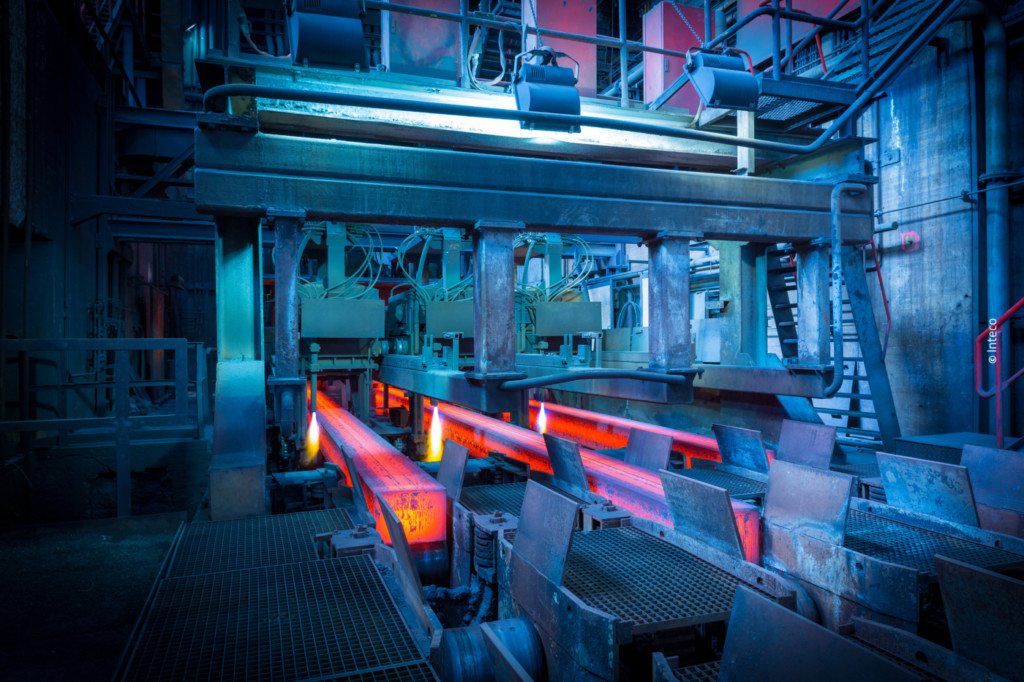
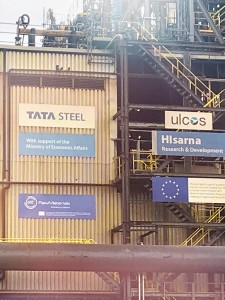
The HIsarna process is a new and breakthrough smelting reduction process for the production of liquid hot metal from iron ores and coal. The main driver to develop this process was the need for an ironmaking process with a significantly reduced carbon footprint and was an outcome of the large EU framework project called ULCOS. Since 2010 a pilot plant has been operational at the Tata Steel site in IJmuiden, the Netherlands.

During previous campaigns, it was becoming clear that the process had a very high raw materials flexibility. The fact that very little raw materials pre-processing is required is a key advantage of the HIsarna process. The coal and ore have to be ground, dried and screened before injection into the process, but no coking or agglomeration is required.

The zinc industry has a demand for zinc ores at acceptable prices, but are also interested in secondary ores to offset the need for primary ores. The availability of primary zinc ores and concentrates is reducing, driving up prices for the ores and concentrates. Therefore there is an increased interest in suitable secondary sources of Zn concentrates.

The ultimate goal of this project is to achieve an enrichment level on Zn in the process dust of HIsarna which would make it suitable for direct use in Zn smelting.

The solution (technology)

Extracting the zinc from HIsarna dust and reusing it for zinc production reduces the environmental impact and contributes to a circular economy.

Partnership

  • TATA STEEL NEDERLAND TECHNOLOGY B.V., Netherlands (Lead partner)
  • CRM Group, Belgium
  • Nyrstar, Netherlands
  • Delft University of Technology, Netherlands

RECO2MAG: Grain boundaries engineered Nd-Fe-B permanent magnets

Project duration: 1.1.2022 – 31.12.2023

Objective:

RECO2MAG has a clear focus to use the latest research for optimisation of manufactured permanent magnet (PM) microstructures via novel grain boundary processing to produce resource-efficient sintered NdFeB PMs with lowered Dy content and improved energy products to be applied in novel e-motors. LCA/LCC analysis Coupled with the latest geological information for critical raw materials will create an independent and efficient EU industry ecosystem.

The solution (technology):

RECO2MAG builds on recent research innovations for creating radically more raw-materials efficient permanent magnets by utilising novel grain boundary diffusion via electrophoresis for reducing the Dy in the magnets developed by the Jozef Stefan Institute and re-engineering the processing of sintered NdFeB PMs currently produced by Slovenian PM manufacturer Magneti Lj. These new PMs have been developed to laboratory scale (TRL 3-5) to be used in next-generation high-efficiency electric motor designs (constructed by automotive supplier company Valeo). These technical innovations are assessed with comprehensive LCA and LCC analysis done by the Swedish Environmental Research Institute and are coupled with a comprehensive rare-earth-element (REEs) discovery and feasibility study undertaken by the Geological Survey of Slovenia and the Universities of Zagreb and Beograd. This study will identify and connect REE deposit owners with technology developers and potential processors and users in the European region and help further reduce imports and ensure a more sustainable and independent EU PM and raw materials industry.

RECO2MAG gathers the needed complementary expertise of key players from geology, material science, physics, and chemistry with industrial PMs processing and electric motor designs, coming mainly from RIS countries (Slovenia, Croatia and Serbia, joined by France and Sweden), from academia (UNIZG-RGNF, UNIBG) and research (JSI, GeoZS, IVL) with an SME (Magneti Ljubljana) and industry (Valeo). RECO2MAG’s ultimate goal is to combine geological, technical and economic data for advanced PM manufacture with sustainable LCA and LCC product chain organisation bridging the knowledge transfer gap in REEs and PMs to complete the knowledge triangle in RIS countries (Slovenia, Croatia), thus expanding currently fragmented expertise into a strong and long-lasting network to improve innovation capacity in PM production value chains.

Partners:

  • Jozef Stefan Institut, Slovenia  (Lead Partner)
  • Geological Survey of Montenegro (GSM) – JU Zavod za geološka istraživanja, Montenegro
  • Geological Survey of Slovenia, GeoZS, Slovenia
  • IVL Svenska Miljoeinstitutet AB (IVL Swedish Environmental Research lnstitute), Sweden
  • Magneti Ljubljana d.d., Slovenia
  • University of Belgrade – Faculty of Mechanical Engineering, Serbia
  • University of Belgrade – Faculty of Mining & Geology (UNIBG-RGF), Serbia
  • University of Belgrade, Vinča Institute of Nuclear Sciences, Serbia
  • University of Zagreb – Faculty of Mining, Geology and Petroleum Engineering (UNIZG-RGNF), Croatia
  • Valeo Powertrain Systems, France

Find out more on the official website of the project.

Mineral Processing/Resource Efficiency

RECOPPs: REcovery of Added-Value Raw Materials from Copper Primary Production

Project duration: 1 January 2021 – 31 December 2023

Objective

RECOPP aims to transition the environmentally and economically sustainable recovery of added-value raw materials Bismuth (Bi) and Antimony (Sb) and removal and inertisation of Arsenic (As) from the residues and by-products generated during the pyrometallurgical production of Copper (Cu), based on RECOPP fast track proven technologies (TRL 5), to a TRL of 7(pilot scale) to validate this technological solution at such operational environment.

The solution (technology)

RECOPP is a technology demonstration project at technology readiness level (TRL) of 7 based on innovative resources recovery technology solutions for the Cu metallurgical industries residues. Non-ferrous metallurgical plants, key elements of our society, are large facilities managing large volumes of raw materials (as Sb and Bi in the form of wastes) and facing two main problems: i) the generation of large quantities of wastes as the processed metal is only a small fraction of the raw material; ii) the presence of toxic elements such as As, generating, as a result, large volumes of toxic waste to be gathered and managed. Reduction of the levels of such toxic elements to avoid its dispersion on the different environmental compartments has been identified in last decades as the main target. RECOPP project will validate a new technological solution integrating the removal of As in a stable and safe mineral phase form, and at the same time, the main contribution of this proposal, the recovery process of added-value raw materials, Bi and Sb, from different waste process streams generated in Cu metallurgical plants, using as case study, those generated at the Atlantic Copper metallurgical facility in Huelva. As result of the project, in addition to the improvement of the waste cycle management on the non-ferrous metallurgical industry, it will be promoted the circular economy approach that allows the recovery added-value secondary resources to be easily market.

Partnership

  • Atlantic Copper S.L.U., Spain
  • Eurecat Technology Centre of Catalonia, Spain
  • Institute of Non-ferrous Metals, Poland
  • LTU Business AB, Sweden
  • Polytechnic University of Catalonia, Spain
  • Spanish National Research Council (Lead Partner), Spain
Mineral Processing/Resource Efficiency

RECOVER: Innovation in Motion: Red mud and Copper slag Valorisation in Engineered Products

Project duration: 1 April 2017 – 31 March 2020

Objective

The general objective of this Upscaling project is to produce full-scale final inorganic polymer products, from Metallo copper slag and Aughinish red mud, at the respective companies’ sites, using a modular and mobile upscaling unit. The generated products need to deliver properties similar to or better than traditional market substitutes and will be evaluated in terms of properties (i.e. leaching, durability, fire resistance, …), to allow for their market uptake within 3 years after the project. Next to realizing the target of TRL 7 by the completion of the project, the on-site production of final products at Metallo and Aughinish plants and the related matchmaking events will contribute to the level of customer readiness by demonstrating its feasibility to local construction companies and policymakers, thereby providing a nucleus for industrial symbiosis.

The solution (technology)

The utilization of Fe-rich semi-vitreous industrial residues as precursors for engineered fire-resistant and porous materials that can enter the European construction materials market will lead to products with lower environmental footprint and renders the metallurgical industries important raw materials suppliers that run integrated zero-waste processes. This valorization of secondary resources in construction materials will yield a positive environmental impact by substantially lowering CO2 emissions (reducing cement production, responsible for over 8% of anthropogenic CO2 emissions) and by avoiding the need for landfilling and the related environmental burden. The modular and mobile unit that is used to produce products on-site of the residue producer, allows to reach out to the (traditional) construction industry and have them witness the transformation of residues to products in first person. This allows them to make a fact-based judgment about the extent to which their existing installations can be used to make these products or which adaptations and investments may be necessary. After the project, the unit can be used to train their employees and have them acquire new skills.The matchmaking events set-up at each of the involved residue producers will showcase the innovation to the construction industry, but also to policy-makers and possible the wider public. This will be a trigger to find regional partners for industrial symbiosis. Because the pilot unit is mobile, the approach can easily be applied to other companies and other regions.Like this, a domino effect can be initiated in which increasingly more residue producers (in first instance copper slag and red mud, but later also other residue types) will start to look for valorization opportunities to get more value out of their slag. Considering the size of the construction market, the relative share of secondary resources will remain relatively limited. Therefore, and because the residues will be typically processed regionally, usual competitors may find a common ground to cooperate in the field of residue valorization and commercialization.

Partnership

  • Katholieke Universiteit te Leuven (KU Leuven), Belgium (Lead Partner)
  • Aughinish Alumina Ltd, Ireland
  • Boliden Commercial AB, Sweden
  • Boliden Mineral AB, Sweden
  • Bundesanstalt für Materialforschung und -prüfung (BAM), Germany
  • Centre de Recherches Métallurgiques asbl (CRM Group), Belgium
  • Metallo Chimique NV, Belgium
  • National Technical University of Athens, Greece
  • ResourceFull BVBA, Belgium
  • Zavod za gradbenistvo Slovenije, ZAG (Slovenian National Building and Civil Engineering  Institute), Slovenia

For more information please visit the official website of the project.