EIT RawMaterials Projects
The ambitious vision of EIT RawMaterials is realised by the creation of a structured collaboration within the Knowledge Triangle, which is the basis of the EIT model.
Call for Innovation & Education Projects is now open!
EIT RawMaterials Projects Timeline
PROCHAINE: Development and delivery of lifelong learning training “Design and upscaling in mineral processing” for people working in the sector

ProSkill: Development of a Skill Ecosystem in the Visegrád Four Countries
PyroFlex: network on pyrometallurgical expertise and infrastructure for residue treatment
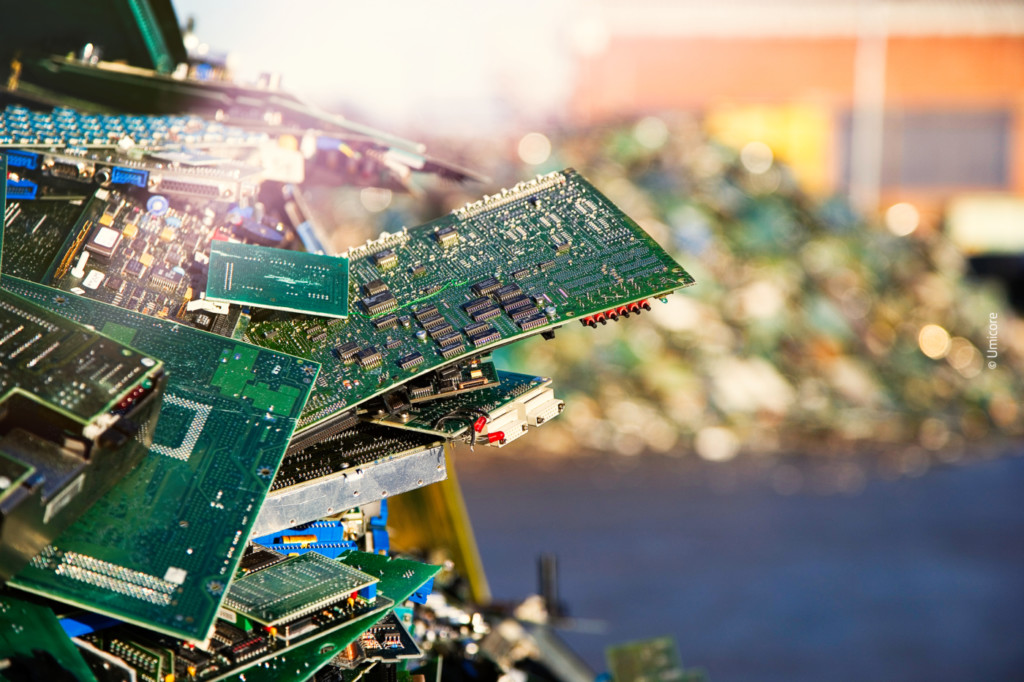
PyroFlex: network on pyrometallurgical expertise and infrastructure for residue treatment
Project duration: 1 January 2016 – 31 December 2018
Objective

PyroFlex unites partners with strong expertise, unique equipment and infrastructure in high-temperature extractive metallurgy that can deal with complex low-grade residues, allowing the recovery/removal of valuable elements present in low concentrations, as well as to produce a clean slag by hot stage engineering and controlled solidification for subsequent valorisation. PyroFlex has an overall aim to stimulate cooperation and development in pyrometallurgical processes and to decrease the barriers to pursue innovation in high-temperature residue treatment. The network provides easier access to a broad range of pyrometallurgical and related infrastructure (for partners in the network), which are typically expensive and requires specific expertise to be properly operated, and offers comprehensive services to outside clients.
The solution (technology)
The PyroFlex Network is part of a more holistic ZeroWaste umbrella network targeting the extraction of valuables from low grade, complex wastes and ores while upcycling the residues to added value products. PyroFlex aims to reach these objectives by building a network of pyrometallurgical expertise and infrastructure, primarily for lab scale equipment, providing proof of concept, complemented with thermodynamic calculations and process models. For this reason, a system to simplify cooperation within the network, and provide services to outside customers will be developed and installed. To strengthen and expand the network, the detection of common project opportunities for KCA and KAVA will be pursued. The target customers of the network are large industries, SMEs and organisations active in extractive metallurgy, as residue producer, processer or both.
Partnership
- Katholieke Universiteit te Leuven (KU Leuven), Belgium (Lead Partner)
- Ghent University, Belgium
- InsPyro N.V., Belgium
- Montanuniversität Leoben, Austria
- Outotec Oyj, Finland
- Rheinisch-Westfaelische Technische Hochschule Aachen (RWTH Aachen), Germany
- Technische Universiteit Delft (Delft University of Technology), the Netherlands
- Umicore, Belgium
For more information, please visit the PyroFlex project website.
QMFormA: A NoI with expertise in the use of computational Quantum Mechanics to tailor design alloys to match application specific material properties
R2R-GeoMet: Raw to Recycled – a geometallurgical approach
R2R-GeoMet: Raw to Recycled – a geometallurgical approach

Objective
To coordinate and deliver integrated training and education initiatives suitable for practical training to industry and to complement masters programmes to support resource characterisation and geometallurgical integration throughout the mining and recycling value chains. This course delivers integrated training and education initiatives suitable for practical training to support resource characterisation and geometallurgical integration.
The solution (technology)
Resource characterisation is strongly linked to the emerging discipline of Geometallurgy, a cross-discipline approach that requires broad awareness of the many aspects of the mining value chain including exploration, mine design, planning, optimisation, valuation, and rehabilitation. Effective education in this area must be based on a fully integrated approach that provides broad awareness before focussing on specialist tools and knowledge.
The R2R-GeoMet Raw to Recycled programme develops and delivers a range of practical “how to” short courses for industry professionals and students as well as longer term courses that will complement existing programmes to support resource characterisation and geometallurgical integration.
The course structure is aimed at three components:
- a detailed overview module that can complement existing programmes (e.g. EMC, Recycling Hub ) – 2 weeks;
- a course for practitioners (industry and research) to introduce methods, outcomes and integration – 2 to 3 days;
- a series of modules designed to follow up the introductory programme and offer practical, hands-on training of specific aspects of integrated resource characterisation – one to two weeks per module.
Partnership
- Université de Liège (University of Liege), Belgium (Lead Partner)
- Luleå University of Technology (LTU), Sweden
- Outotec Oyj, Finland
- Universidad Politecnica de Madrid, UPM (Technical University of Madrid), Spain
RACE: RAw Communication & Engagement

RACE-TP: Lightweight Recyclable Automotive thermoplastic CompositE structural parts for large series production
RACE-TP: Lightweight Recyclable Automotive thermoplastic CompositE structural parts for large series production

Project status: Completed.
Objective
Over the past 50 years, the automotive industry has seen a continuous increase in the use of more and more sophisticated materials in answer to increasing levels of functionalities and safety in the vehicles, and it is now mandatory due to the need to reduce CO2 emissions to less than 95 grams emitted per km to make a step change in the weight reduction of vehicles. The current solutions that are under development to reach this goal rely on the use of new materials such as high strength steel, aluminium, magnesium, or organic based glass or carbon composite materials. In that context, the aim of the RACE-TP project is to contribute to the industrialization of a new thermoplastic composites technology based on acrylic chemistry recently developed by Arkema.
The solution (technology)
The proposed solution is based on a new thermoplastic composites technology based on acrylic chemistry, a technological approach that has been chosen initially to answer the technico-economic requirements defined with the French auto manufacturers and tier-one auto suppliers Renault, PSA, Faurecia and Plastic Omnium in the Compofast and FastRTM projects. The technology combines several advantages of interest for this type of applications:
- A low resin price as compared to other chemical solutions insuring that the cost of ownership of parts will be competitive with metal solutions;
- A short supply chain due to the use of the RTM process, with a direct supply of resin to the final part manufacturer (Tier-one or Car manufacturer) that also guarantees the best possible economics;
- Access to the direct manufacture of complex 3D parts;
- Possibilities to assemble parts by welding or gluing;
- The recyclability of the parts, with the possible re-use of the material in injection moulded thermoplastic parts for the automotive industry.
Partnership
- Arkema, France (Lead Partner)
- Mondragon Corporation, Spain
- IRT M2P, France
- Ghent University, Belgium
RADIUS