EIT RawMaterials Projects

The ambitious vision of EIT RawMaterials is realised by the creation of a structured collaboration within the Knowledge Triangle, which is the basis of the EIT model.

Call for Innovation & Education Projects is now open!

Learn more

EIT RawMaterials Projects Timeline

392 Projects
Project Portfolio
Innovation Themes
Innovation Areas/Lighthouses

Sustainable Mining

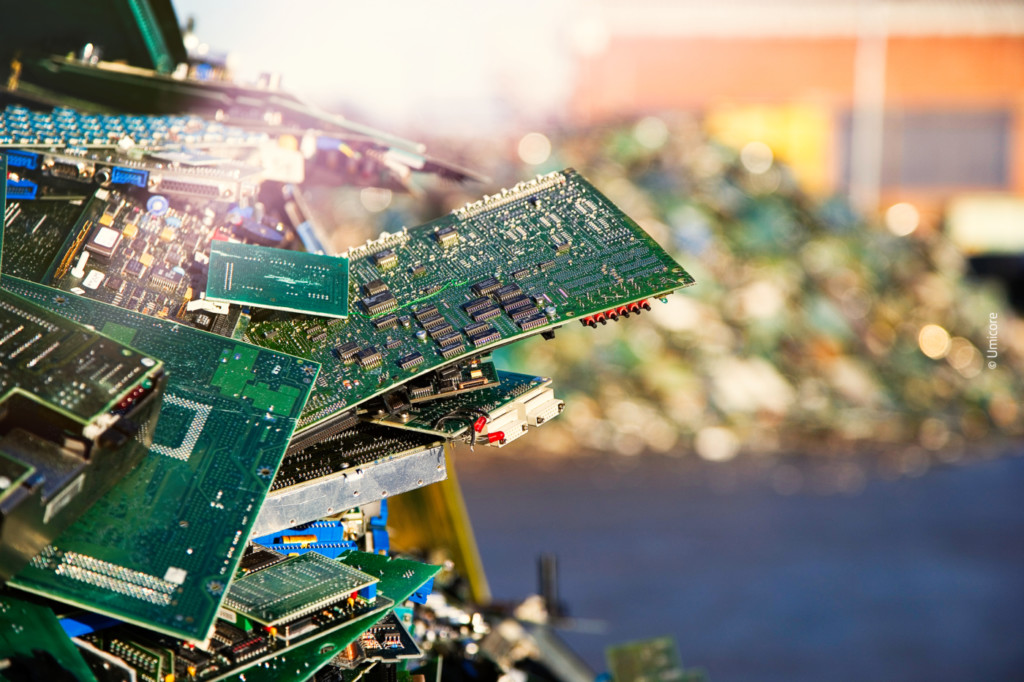
PD-EEDC: Process Development and Optimization for Eco-Efficient Dry Comminution
Project duration: 1 January 2020 – 31 December 2021

Objective

The main objectives of the proposal are to implement, demonstrate, scaleup, and design a complete dry comminution for ores and slags eco-efficiently. The eco-efficiency parameters in comminution practices will be tested and demonstrated by combination of advanced Fine Crushing and fine dry Vertical Roller Milling. Furthermore, the feasibility concept of the process to improve recovery and process efficiency will be examined and demonstrated.

The solution (technology)

The main objective of the project is to present the feasibility of the dry eco-efficient comminution process to serve the mining industry worldwide. Both the equipment manufacturing and mining companies within the project are internationally well-known and have activities inside and outside EU. Furthermore, there are international collaborators/partners that contribute to process develop and proof of concept.
It is believed that successful demonstration of the technologies and developed flowsheets will be a breakthrough within mining industry and will attract companies and stakeholders within EIT Raw Materials society and outside the society worldwide. The successful outcomes will be demonstrated as the technology transfer and knowhow to the mining society worldwide. External stakeholders will also be benefited through educational and training program. Young talents will be trained and motivated to contribute to further developments in future. However, through refreshment training courses and seminars, the new technology, developed flowsheets, and related outcomes can be transferred to engineers, technicians and industry managers.
Furthermore, the outcomes would be commented to the society to learn and understand how mining industry can perform eco-efficiently, considering all environmental aspects to protect environment while providing raw materials for sustainable development. That eases the “licence to operate” process as one of the challenges in front of mining industry.

Partnership

  • Boliden Mineral AB, Sweden
  • ERAMET IDeas, France
  • Geological Survey of Finland, Finland
  • Norman B. Keevil Institute of Mining Engineering, University of British Columbia, Canada
  • Northland OreTech AB, Sweden
  • Sandvik SRP AB, Sweden
  • Sandvik AB (Lead Partner), Sweden
Recycling

PHEIDIAS: An Innovative Hydrometallurgical Recycling System for PGMs Recovery

Project duration: 1 January 2021 – 31 December 2022

Objective

PHEIDIAS will upscale an innovative hydrometallurgical process for the recovery of Platinum Group Metals (PGMs) from Spent Vehicle Catalytic Converters, focusing on the RIS markets of Greece, Poland, Hungary, Bulgaria, Slovakia, Slovenia, Romania, Cyprus, and Serbia. The technology will be commercialized, yielding profits through: a) selling of PGMs recovered through a highly efficient process, and b) licensing rights to recycling facilities.

The solution (technology)

PHEIDIAS aims to bring into the market an innovative hydrometallurgical process for the recovery of Platinum Group Metals (PGMs) from Spent Vehicle Catalytic Converters (SVCCs). The competitive advantage of this technology is the increased material recovery rate, as well as significantly lower operational costs. The rates of Platinum, Palladium, and Rhodium recovery with this technology have already reached ~98%, ~98%, and ~60%, respectively, with highly increased operating flexibility and cost efficiency. Every time a batch of SVCCs becomes available, initiating the process requires much less energy than the pyro-metallurgical processes mostly employed in the RIS region (test units operate at 70°C than ~1200°C of competitive solutions). Further to this, the technology uses solvents in low concentrations, which improves waste management performance.

The project will focus on the markets of Greece, Poland, Hungary, Bulgaria, Slovakia, Slovenia, Romania, Cyprus, and Serbia, where project partners have already developed a network of SVCCs suppliers through their previous collaboration in the INNOCAT and INNOCAT-up projects. To that end, partners will upscale and pilot-test the proposed technology at large-scale operation conditions, bringing it from TR5 to TRL8 during the project, and commercialise it within one year after project completion (TRL9).

PHEIDIAS foresees revenues from both selling the PGMs recovered, for which demand is both at an all-time high in 2020 and still increasing, as well as from selling access to the technology and know-how through licensing. To that end, the partnership will also develop a Go-To-Market strategy and establish commercial networks and collaborations in the aforementioned markets, primarily with the car maintenance and recycling industry, and further explore possibilities for EU-wide expansion (a Spanish partner has been included in the consortium for this reason).

Partnership

  • Enalos Research and Development, Greece
  • Hellenic Society for the Promotion of Research and Development Methodologies (PROMEA), Greece
  • International Center for Advanced Materials and Raw Materials of Castilla y León – ICAMCyL, Spain
  • Mineral and Energy Economy Research Institute of the Polish Academy of Sciences (MEERI), Poland
  • Technical University of Kosice, Slovakia
  • University of Miskolc, Hungary
  • RIS TASK PARTNER 2 – ROMANIA, Romania
  • RIS TASK PARTNER 1 – SLOVENIA, Slovenia
  • Monolithos Ltd (Lead Partner), Greece
Recycling

PhosForce

01 January 2018 – 31 March 2021

Objective

Phosphorus (P) is an essential and irreplaceable nutrient for humans and nature. This is a limited resource, especially in Europe which depends to 92% of its needs from a handful of countries, including politically unstable countries like Morocco (Western Sahara). Thus, it becomes essential to secure the P supply in Europe by finding secondary sources and recycling end-of-life products. Municipal wastewater is one of those, as it contains 15% of the European mineral phosphorus demand.

PhosForce’s up-scaling into a market-ready solution will be made possible through an industry-driven European Consortium covering five different countries. Various entities of the Veolia group will perform prototype and full-scale demonstrations on one German WWTP. Two research partners will complement the development through lab tests and modeling work (New University of Lisbon), required to increase the replication potential of the concept on diverse types of WWTPs, as well as product characterization and Life Cycle Assessment (Mineral and Energy Economy Research Institute of the Polish Academy of Science).

Specific attention will be paid to marketing/market take-off with the following actions in the last year of the project:

  • Design up‐scaling will be described in technical guidelines and “market ready” standards
  • Life Cycle Analysis and Costing of selected designs will be performed by MEERI, respectively Krüger
  • A marketing and communication plan will be developed by OEWA and Krüger.

The solution (technology)

Germany will make phosphorus recovery from sewage sludge mandatory for all Waste Water Treatment Plants (WWTPs) larger than 50,000 person equivalents (p.e.). This project aims at giving a solution to German middle-sized WWTPs by up-scaling a new phosphorus recovery process scheme in WWTP sludge stream and demonstrating its technical and economical performances at large scale. The process targets > 50% phosphorus recovery and will be cost-effective, easy to implement, eco-friendly and will present low health safety risks.

The advantages of the solution will be highlighted and communicated through appropriate vectors. The principal communication target will be the 400 German WWTP operators that will need to prepare an implementation plan for P‐recovery by 2023. A final international workshop will be organized at Schönebeck WWTP to present life the pioneer unit and the results gathered in the project.

Partnership

  • Oewa Wasser und Abwasser GmbH, Germany (Lead partner)
  • Krüger AS (KRG), Denmark
  • Mineral and Energy Economy Research Institute of the Polish Academy of Sciences (MEERI), Poland
  • New University of Lisbon – Faculty of Sciences and Technology (FCT NOVA), Portugal
  • Veolia Deutschland GmbH, Germany
  • Veolia Environnement SA (VESA), France
  • Veolia Recherche et Innovation (VERI), France

PIMAS: Portable Instant Mineral Analysis Systems

Objective

PIMAS will build a network of infrastructures involving top-level research organisations in Europe and will exploit their know-how to collectively investigate and test new technologies, discuss and define guidelines for innovative sensors capable to cut exploration time and costs, and implement efficient mining exploitation.

The solution (technology)

PIMAS aims at exploring novel photonic sensors (based on X-ray, laser techniques and integrated IoT tools) able to provide on-site and in situ real-time evaluations of mineral deposits. PIMAS outcomes will merge in finalized proposals of technology and methods implementation. Technical services will start joint projects with end-users worldwide.

Partnership

  • Consiglio Nazionale delle Ricerche, Italy (Lead Partner)
  • ASTER S.Cons.p.A, Italy
  • Consejo Superior de Investigaciones Cientificas, Spain
  • Commissariat a l‘energie atomique, France
  • Fraunhofer Gesellschaft, Germany
  • Fondazione Bruno Kessler, Italy
  • MISTE-R SCRL, Italy
  • Università degli Studi di Trento, Italy

PM-Life: LifeLong Learning in Powder Metallurgy
Project duration: 1 January 2018 – 31 March 2021

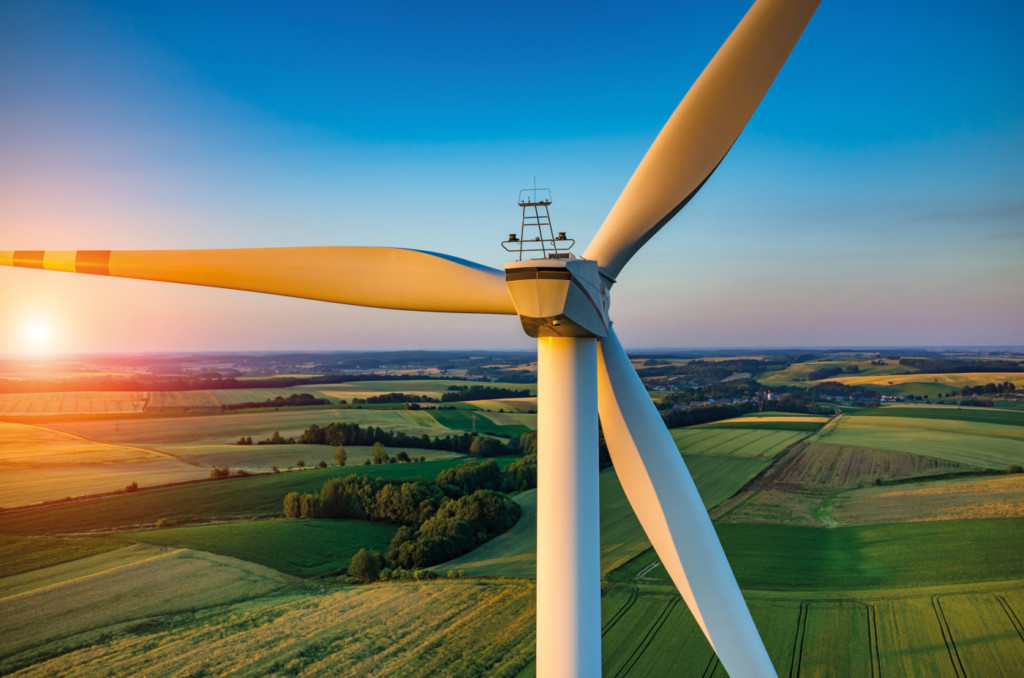
PM Life is a Lifelong training on Powder Metallurgy organised by the European Powder Metallurgy Association (EPMA) and some of its members.

Objective

Delivering a training programme to develop the future of powder metallurgy and help professionals seeking for career opportunities in this field.

The solution (technology)

The course will offer learners the chance to either attend the full five-week programme to learn about the whole industry, or chose individual modules to deepen their knowledge in certain areas. Each week will take place in a different country (Sweden, France, Spain, the UK, Germany) and will consist in both basic and advanced courses on powder metallurgy related topics. They include topics such as materials science, engineering, entrepreneurship, case studies in factories or universities and a plant visit. Following the training weeks, a three-week internship will be proposed to the participants either in a factory or in a university, to practice what they have learnt during the course in a relevant workplace. A certification will be delivered by EPMA after the completion of the training and after passing an exam.

Partnership

  • Institut polytechnique de Grenoble (Grenoble Institute of Technology, INP), France, (Lead Partner)
  • Chalmers University of Technology, Sweden
  • Universidad Carlos III of Madrid, Spain
  • Università degli studi di Trento, Italy
  • Montanuniversität Leoben, Austria
  • Royal Institute of Technology (KTH), Sweden
  • European Powder Metallurgy Association (EPMA), the United Kingdom
  • Hub Innovazione Trentino, Italy
  • Commissariat à l’énergie atomique et aux énergies alternatives, CEA (French Alternative Energies and Atomic Energy Commission), France
  • Frauhofer-Gesellschaft, Germany
  • Manufacturing Technology Centre (MTC), the United Kingdom
  • Höganäs AB, Sweden
  • Sandvik AB, Sweden
  • ERAMET, France

For more information about the PM Life training programme, please visit the project website.

Circular Economy

POLICE. POLicy instruments and Incentives for Circular Economy – Incentives for circular economy

Project duration: 10 June 2019 – 31 December 2019

Objective

The project is about identification and description of different policy instruments that influence and incentives that promote and boost Circular Economy (CE).

The solution (technology)

The implementation ways of the policy instruments and incentives are described and an in-depth evaluation of the efficiency of positive and negative policy instruments will be conducted. Additionally, interviews will be performed, complement the findings from literature review and analysis. Besides knowledge creation, dissemination is in an important role in the project, with, e.g., a workshop being organised. The project will deliver new knowledge on the influence of policy instruments and incentives on CE as well as the ways the most effective ones can be implemented to boost the circular economy. All stakeholders that wish to advance CE in the society and industries will benefit from the POLICE project: EU, individual countries and cities, industries and industry organisations, policymakers and civil servants, academia, non-governmental organisations and individual citizens. The project will identify the means to overcome the key barriers of CE, thus the impact of the project is huge. The project is implemented and coordinated by VTT Technical Research Centre of Finland Ltd, the ultimate strength of which is the multi-disciplinary and comprehensive approach to processes and policy instruments of socio-technical change, environmental policy instruments and incentives, strategic foresight, technical and technological aspects of the circular economy, and flexibly combining the expertise in all these areas. VTT has a strong track record to support the POLICE project.

Partnership

  • Teknologian tutkimuskeskus VTT (Technical Research Centre of Finland Ltd. VTT), Finland (Lead Partner)

Final Report of the POLICE project

PoSe: Powder technology piloting service for Secondary raw materials
Objective

The main objective of the project is to establish service platform of secondary raw material based powders in selected application areas.

The solution (technology)

The aim is to provide easy access one-stop service for companies, especially SMEs, to boost up development and adoption of resource efficient secondary raw material based manufacturing and alternative solutions for reducing waste, unused residues and side-stream materials and also when applicable substitution of critical raw materials (CRMs).

Partnership

Mineral Processing/Resource Efficiency

Pre-AMSOLI: Development of Higher Education of Solid-Liquid Separations

Project duration: 29 July 2019 – 31 December 2019

Objective

The need for this particular educational program is motivated by industrial challenges due to more stringent environmental requirements and getting equipment to work in more challenging environments.

The solution (technology)

The course on solid-liquid separation management to be developed brings together a multicultural group of Doctoral-level students to learn, discuss and develop new ideas in a new pedagogical concept.

Partnership

  • Aalto-Korkeakoulusaatio (Aalto University), Finland (Lead Partner)
  • BASF SE, Germany
  • Institute of Non-ferrous Metals – SIEĆ BADAWCZA ŁUKASIEWICZ – INSTYTUT METALI NIEŻELAZNYCH, Poland
  • Politechnika Wroclawska (Wroclaw University of Science and Technology, WUST), Poland
  • Technische Universität Bergakademie Freiberg (TUBAF), Germany
  • Université de Lorraine (UL), France

For more information, please visit the project web page.

Recycling

PreFlex: pre-treatment and physical separation of complex low grade ores and residues
Project duration: 1 January 2016 – 31 December 2018

Objective

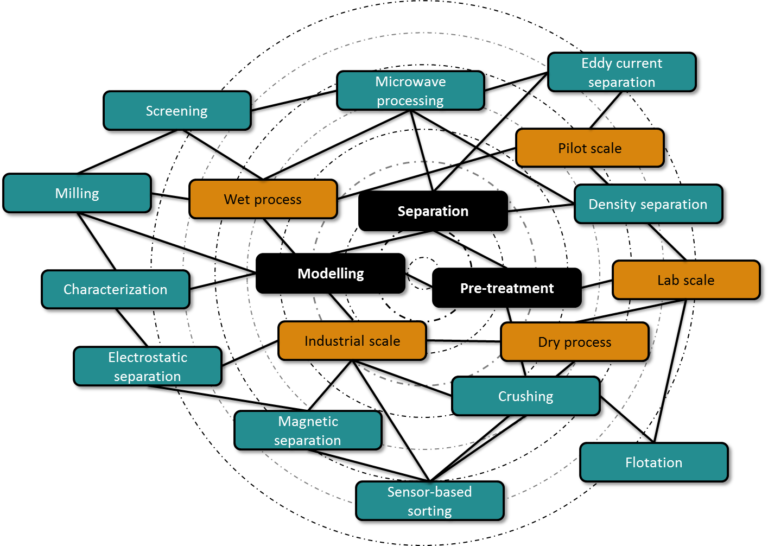
The PreFlex NoI aims to boost innovation in the raw materials sector through collaboration by establishing a Europe-wide network that hives the infrastructure and skills regarding “Pre-treatment and Physical separation”. The PreFlex Network of Infrastructure (NoI) offers easy access to infrastructure where clients can benefit from optimal equipment choices provided by all partners in the network.

The solution (technology)

The PreFlex network will provide tailored solutions to industrial stakeholders to find optimum valorization routes for complex, low-grade ores and residues. The infrastructure of the network includes equipment at lab and pilot scale and supporting modelling tools.

Partnership

For more information, please visit the project website.