EIT RawMaterials Projects

The ambitious vision of EIT RawMaterials is realised by the creation of a structured collaboration within the Knowledge Triangle, which is the basis of the EIT model.

Call for Innovation & Education Projects is now open!

Learn more

EIT RawMaterials Projects Timeline

392 Projects
Project Portfolio
Innovation Themes
Innovation Areas/Lighthouses

Substitution

Modelling Factory: Collaborative modelling, simulation and decision making through shared Modelling Factory
Project duration: 1 March 2016 – 31 December 2018

Objective

The idea in the Factory is to create a virtual working space, where individuals and organisations can test and share their ideas on how to advance material efficiency and circular economy by creating different types of computational models and solutions and to validate them against real provided scientific, industrial and environmental data. This project will support models in different levels of details like in materials level, component level and systems level. Both commercial and free modelling tools can be used in the Factory.

The solution (technology)

The outcome of the activity is an Open Modelling Factory where different computational tools of KIC partners can be used as plug-ins. The idea is to harvest different types of relevant tools and models of the partners, assess their integration possibilities and implement the most relevant bridges. The goal is to have an impact on developing new insights into obtaining, using, and recovering materials, and creating fertile ground for new innovative business start-ups to be formed and new product ideas also from large companies to have faster product design cycles.

Partnership

For more information, please visit the official website of the project.

Mineral Processing/Resource Efficiency

MONICALC: Integrated system for Monitoring and Control of Product quality and flexible energy delivery in Calcination

Project duration: 1 May 2016 – 31 December 2018

Objective

Implement and test integrated monitoring and control products and services for minerals calcination processes in relevant applications in the Minerals and Raw Materials Industry.

The solution (technology)

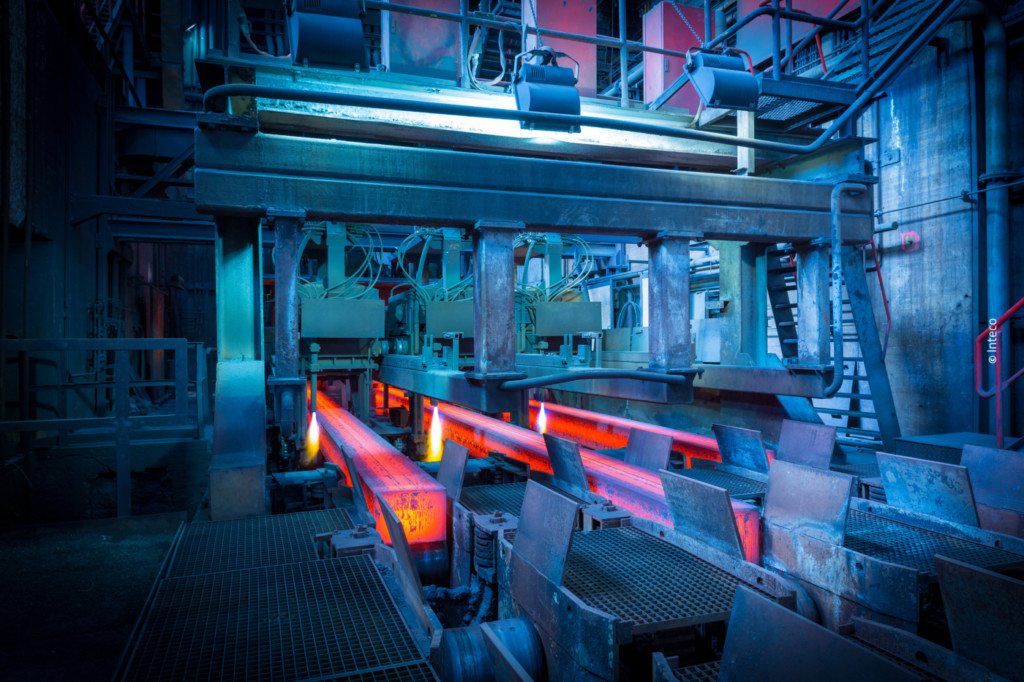
A novel online analyzer for kaolin characterization, monitoring and control algorithms for calciner across the whole production value chain based on ore mineralogy, and an integrated mine big data bank. The solution will be further enhanced in the MONICALC by the flexible energy delivery system from the gasifier being able to use renewable energy raw materials.

Partnership

Learn more about the MONICALC project here.

MOOC-DfR: Creating a Massive Open Online Course (MOOC) “Design for R = DfR”

Objective

The project objective is to create and establish a massive open online course (MOOC) for “Design for R” using filmed short lectures. This MOOC will be integrated into the EIT RawMaterials academy. Target groups are master students & PhD’s as well as professional product designers and manufacturers to raise the awareness and convey possibilities for DfR – which includes design for reuse, repair, refurbishing remanufacturing and importantly, recycling.

The solution (technology)

Establishing the proposed MOOC will achieve the following main goals: filmed short lectures and exercises regarding the different topics of ‘re’ and product design aspects, easy access for the target groups to the learning materials, part-time study during employment, raising the awareness DfR product opportunities for the product manufacturers, stronger consideration of DfR oriented product development rules, conveying information and possibilities, how to integrate DfR into the product design process, effective learning by studying application-orientated design cases and collaboration with other KIC activities, e.g. other MOOC-projects and serious game projects. The DfR project will provide this novel learning approach in the EIT RM around the aim of boosting the competitiveness, growth and attractiveness of the European raw materials sector via radical and innovative on-line learning activities. A further objective is to transfer skills and knowledge between the partners and to the Raw Materials Academy. The skills and knowledge transfer covers not only the design and development of world-class MOOCs, but also materials knowledge and practice.For further detailed description of the project background, objective, scope, needs and impact please refer to the complementary PDF file of this proposal.

Partnership

  • Clausthal University of Technology, Germany (Lead Partner)
  • Leiden University, The Netherlands
  • Swerea IVF AB, Sweden
  • Technische Universiteit Delft (Delft University of Technology), The Netherlands
Sustainable Mining

MORAMA: Mexico as an opportunity for EIT Raw materials projects

Project duration: 1 January 2018 – 31 March 2019

Objective

The MORAMA project focus on identification, promotion, and definition of collaboration opportunities between European Raw Material start-ups, SMEs and Up-scaling projects on one side, and Mexico’s raw materials industry needs on the other side. A strategic alliance with one of the most relevant research institutions in Mexico, CIDESI, and all its ecosystem, will be the key path to access to these local opportunities.

Mexico is considered to be a high potential market for raw materials, especially in the mining industry (Mexico has a strong mining industry, part of it supplying to European companies) and in composite materials supply chain and life cycle (to support European companies installed in Mexico and requiring composite materials, especially aeronautics and automotive industries).

The solution (technology)

To do so, MORAMA will organise 2 matchmaking events where selected Raw Materials initiatives, already boosted by the community, will meet the Mexican ecosystem (companies, investors, research organisations, universities), to identify and promote collaboration opportunities, and define a strategic collaboration roadmap, always observing the interests of the EIT RawMaterials partners.

The MORAMA project is aligned with and will strengthen other larger European initiatives in the region, such as TREE or ELAN projects and the EU-Latin American dialogue on raw materials and the development of an EU-Latin American mineral materials development platform.

Partnership

  • Tecnalia Ventures, S.L., Sociedad Unipersonal, Spain (Lead partner)
  • Centro de Ingeniería y Desarrollo Industrial (CIDESI), Mexico
  • Fundación Tecnalia Research & Innovation, Spain
  • Technical Research Centre of Finland Ltd. (VTT), Spain
  • Trinity Dublin College – The Provost, Fellows, Foundation Scholars, and the other members of Board, of the College of the Holy and Undivided Trinity of Queen Elizabeth near Dublin, Ireland
Mineral Processing/Resource Efficiency

Morecovery: Modular recovery process services for hydrometallurgy and water treatment

Project duration: 1 January 2019 – 31 December 2021

Objective

The need for raw materials, especially Rare Earth Elements (REE), is increasing rapidly in the EU and globally. At the same time, the amount of mine waste is increasing drastically together with concerns related to the environmental effects of mining. The mining industry can achieve more eco-efficient and selective raw material production by enhancing the utilization of side streams and mine waste. This development highlights the need to develop more efficient recovery methods and to efficiently remove dissolved metals from mine water streams while securing the surrounding environment and ecosystem.

The solution (technology)

This project aims to enhance the eco-efficient and sustainable use of natural resources by creating a modular recovery process service package for hydrometallurgy and water treatment. In addition, the organic adsorbents will be tested for efficient applications in semi-passive drainage water treatment and REE and base metal recovery. The modular recovery process service package including a mobile pilot plant combined with innovative SME technologies and eco-efficient organic adsorbents will be a powerful tool in developing utilization and cleaning of mining side streams.

Partnership

  • Geologian tutkimuskeskus, GTK (Geological Survey of Finland), Finland (Lead Partner)
  • Agencia Estatal Consejo Superior de Investigaciones Cientificas M.P., CSIC (Spanish National Research Council), Spain
  • LTU Business AB, Sweden
  • Savonia University of Applied Sciences Ltd, Finland
  • Suomen Malmijalostus Oy (formerly Terrafame Group Oy), Finland
  • University of Eastern Finland, Finland
  • University of Huelva, Spain

Find more information about the innovation project on Morecovery website.

MOTOPED: Modular Toolbox for Professional Education
Project duration: 15 October 2018 – 30 June 2021

Objective:

In MOTOPED, industry and academia jointly develop training tools to meet industry’s need for focused, flexible training of new and existing workforce. MOTOPED combines a modular on-demand web-based training “toolbox” and a professional blended learning methodology. It will be developed with and beta-tested by learners from industry with Umicore as test case. The toolbox and concept can also be implemented in other fields and networks later.

The solution (technology):

There is an urgent need in industry to match the training of professionals with today’s industry needs of increasing process flexibility, meeting customer and societal needs, delivering high environmental, social and ethical performance, and rapidly changing career paths of the workforce. This training should be pace-based, attractive, of high-quality, tailored to the audience and modular so learners can learn anything, anytime, anywhere. MOTOPED project will provide an approach for high quality training on demand using a blended learning approach for fast, efficient, effective and focused training of new and existing workforce, especially to increase innovation. Therefore a generic web-based training based on a toolbox approach and consisting of different teaching methodologies (videos, presentations, reading material, knowledge clips, quizzes …), the MOTOPED concept, will be developed and piloted with learners from the industrial partner. The MOTOPED concept will provide the possibility to complement the generic toolbox with add-on modules, tailored to the audience.

This will allow potential further commercialization of the platform, since it can be easily tailored to other companies or to other sectors. Also MSc and PhD education will be able to profit from the outcomes of this project. The concept and content developed in the project will be readily usable for the project partners. Communication and dissemination will be key to promote the capacities of the MOTOPED concept, and this will be done via the EIT Raw Materials network, the Raw Materials Academy, but also beyond. The project will lead to a more highly skilled workforce in the sector and as such, contribute to the key targets of EIT Raw Materials.

Partners:

UMICORE NV, Belgium
Ghent University, Belgium
Helmholtz-Zentrum Dresden-Rossendorf e.V. (HZDR), Germany
Technische Universität Bergakademie Freiberg (TUBAF), Germany

For more information, please visit the project website.

Exploration

MULSEDRO: Multi-sensor drones for geology mapping

Project duration: 1 April 2017 – 31 March 2020

Objective

This upscaling project will be at the boundary between a small-scale to a medium scale project. The final product will be two drone systems equipped with photogrammetry magnetic, and hyperspectral (HS) sensors – the two latter to be used optionally ready to the market.

The solution (technology)

First, a rental service for industrial partners and exploration companies that do not wish to invest in the technology but require the benefits of this technology, secondly a UAV platform that can be purchased by customers will be implemented. The use of UAV based sensors is firstly intended for exploration but can directly be implemented for mining activity monitoring and post-mining rehabilitation. It has therefore a clear impact on “Increasing resource and energy efficiency” all along the value chain. By providing rapidly key information to the field geoscientists the intended UAV based products allow better exploration targeting and focussing on key areas and thus increase their efficiency, reduce costs and energy (for example by decreasing the amount of drilling and by reducing the number of more expensive airborne and helicopter surveys). The project provides a non-invasive exploration alternative and thus allows to Reduce environmental impact but as a monitoring tool for (post-) mining activities, it also allows a better control on the environmental footprint. Public acceptance for exploration and mining activities is largely dominated by environmental issues. By providing a method that reduces the footprint of mining activities while enabling a more efficient survey this project opens the door to renewed exploration in Europe and thus contribute to the “security of supply of materials” in Europe. Finally, by developing a new technology with industrial partners it will strengthen the competitiveness of industries across Europe and increase employment and growth.

Partnership

  • Geologian tutkimuskeskus, GTK (Geological Survey of Finland), Finland (Lead Partner)
  • DMT GmbH & Co. KG, Germany
  • Geological Survey of Denmark and Greenland, GEUS, Denmark
  • Helmholtz-Zentrum Dresden-Rossendorf e.V. (HZDR), Germany
  • LTU Business AB, Sweden
  • Radai Oy, Finland
Exploration

MuVerDrone – Multi-Versatile Exploration Drone

Project duration: 1 January 2018 – 31 March 2021

Objective

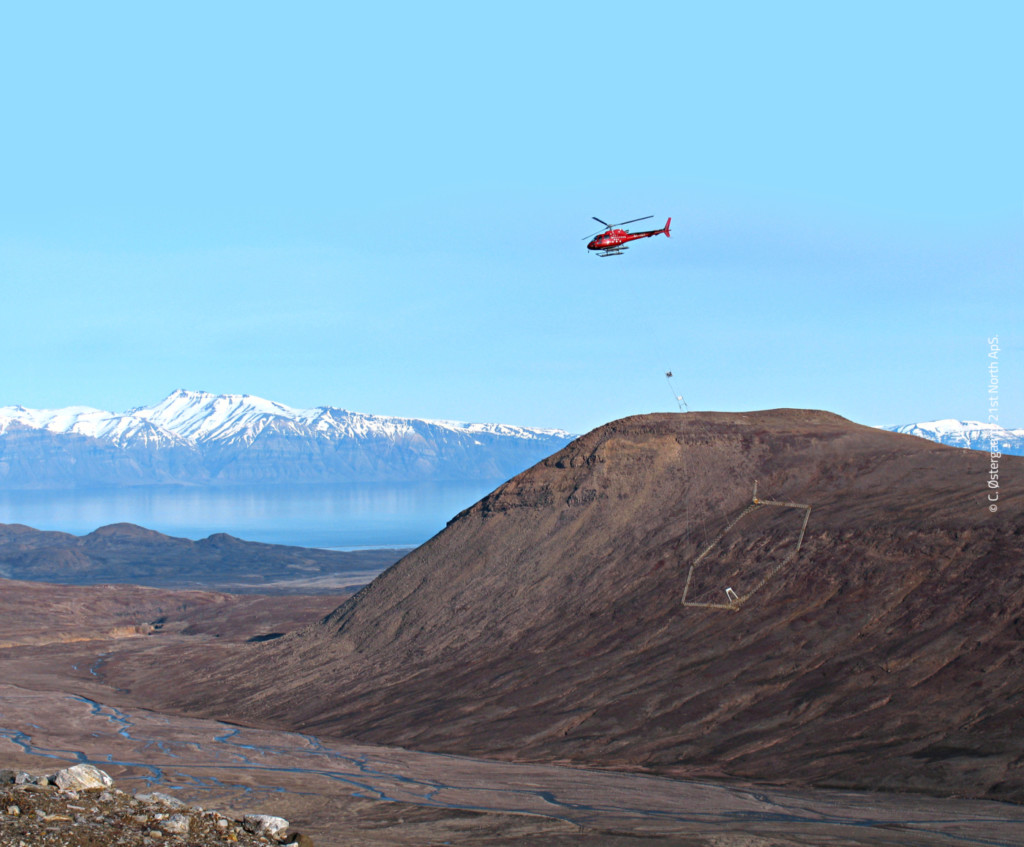
Airborne geophysical surveying is an annual billion dollar industry. High-quality remote sensing, in particular, mapping of the magnetic signature of the subsurface is critical to successful natural resource exploration. Today, such surveys are often carried out by helicopters or from the ground. While helicopters are very expensive, logistically challenging and may exert a high impact on the local fauna, ground surveys are time consuming and incomplete, in particular in mountain terrains and areas with dense vegetation. Significantly, getting from the raw data measurements to final applicable data sets is a challenge and financial expense that many exploration companies may not overcome themselves.

The solution (technology)

We intend to upscale a hybrid drone into a multi-versatile geophysical platform, capable of conducting long-range and high-quality geophysical surveys at low costs. We will implement key geophysical mapping systems on the platform, transforming it into a MUlti-VERsatile geophysical surveying Drone (the MuVerDrone), designed specifically for mineral exploration.

Partnership

  • Technical University of Denmark, Denmark (Lead partner)
  • The French geological survey (BRGM), France
  • Luleå University of Technology (LTU), Sweden
  • Ofoten Minerals Pty Ltd, Australia
  • Sky-Watch A/S, Denmark

For more information, please visit the project website.

Substitution

NANOGREAT: Graphene NANOcomposites REActors at preindustrial Technology readiness

Project status: Completed

Objective

The project aims at building up a Network of Infrastructure in the topic of Graphene-based materials and composites. The project has the scope to build up collaborations between a whole chain of laboratories and companies working within the theme substitution (“more than metal”). NANOGREAT will make available to all partners of the CLCs a Network of Facilities actually involved in research on new and innovative Graphene Related Materials (GRMs) for several fields of application. This will give a service to the development needs of the involved/interested partners, at the same time benefiting from a collaboration with the FET FLAGSHIP GRAPHENE, leveraging the potential of new materials developed.

The solution (technology)

The network of infrastructures focus is:

  • Share the equipment for material characterization, testing and validation;
  • Share a service of material production at the actual scale of processes (from mg to g levels);
  • Start a design and planning phase for the upscaling of production in the most promising application sectors for key stakeholders of the EIT RawMaterials community.

Graphene is a record material for several physical, mechanical and chemical properties among all other known. GRMs are identified in several sectors as a potential substitution for several actual matters and technologies. NANOGREAT, more than connecting a scientific and technical community on this topic, will prepare and plan an up scaling in infrastructures able to supply materials to several promising fields of applications. The new up-scaled processes will target a significantly higher volume and range of Graphene and other Carbon nanomaterials. Sectors of applications for NANOGREAT will be thermoplastics, thermosets and specific fluids, ceramic-Graphene composites, materials for energy applications such as storage and several others.

NANOGREAT will thus:

  • establish an open collaboration among structures;
  • identify priorities and challenges where new services in terms of production are needed;
  • start the design of new processes and reactors at an up-scaled dimension.

Partnership

  • Hub Innovazione Trentino S.c.a.r.l. (HIT), Italy (Lead Partner)
  • Agenzia Nazionale per le Nuove Tecnologie, l’Energia e lo Sviluppo Economico Sostenibile (ENEA), Italy
  • Bay Zoltan Non-Profit Ltd. for Applied Research, Hungary
  • Fondazione Bruno Kessler, Italy
  • Fundacion Tecnalia Research & Innovation, Spain
  • Instytut Metali Niezelaznych, IMN (Institute of Non-Ferrous Metals), Poland
  • Ovidius University of Constanta, Romania
  • Radboud University Nijmegen, The Netherlands
  • Tecnalia Ventures, S.L., Sociedad Unipersonal, Spain
  • Universidad Politécnica de Madrid, Spain
  • Università degli Studi di Trento, Italy

Find more information on the official website of the project.