EIT RawMaterials Projects

The ambitious vision of EIT RawMaterials is realised by the creation of a structured collaboration within the Knowledge Triangle, which is the basis of the EIT model.

Call for Innovation & Education Projects is now open!

Learn more

EIT RawMaterials Projects Timeline

392 Projects
Project Portfolio
Innovation Themes
Innovation Areas/Lighthouses

Substitution

LightBody: Infrastructure and expertise network for Lightweight mobility, body and chassis

Project duration: 1 January 2016 – 31 December 2018

Objective

This network of infrastructure is part of the Lighthouse Program “Raw material solutions for a sustainable European Mobility industry”. The different projects in this lighthouse program on Networks of infrastructure (NoI), and education are interlinked in order to create the optimal solutions to bring technology to the market. More specifically there are three proposals for NoI related to this Lighthouse Program e.g. body and chassis, e-energy and powertrain.

The solution (technology)

The goal of this network is to set up a collaboration between partners that master all parts of the value chain, provide interlinking between the different NoI’s and in the end set up projects with these different partners in order to speed up the introduction of new raw materials in the mobility industry. Last but not least the NoI will provide a solid base to the initiation and growing of long-life-learning programs.

Partnership

  • Ghent University, Belgium
  • Arkema, France
  • Fraunhofer-Gesellschaft zur Förderung der angewandten Forschung e.V. (Fraunhofer), Germany
  • Fundación Tecnalia Research & Innovation, France
  • Katholieke Universiteit te Leuven (KU Leuven), Belgium
  • Mondragon Corporation S. Coop., France
  • MONDRAGON GOI ESKOLA POLITEKNIKOA S. COOP. (MGEP), France
  • Università degli Studi di Milano – Bicocca (University of Milano- Bicocca), Italy
  • Università degli Studi di Padova (University of Padova), Italy
  • Université de Bordeaux, France

For more information, please visit the official website of the project.

LightRight: Materials for lightweight design – how to treat them right

LightRight is a Lifelong learning project on materials for lightweight design. 

Objective

Developing effective training modules for professionals (technical staff and managers), which provide them with relevant material knowledge for lightweight design.

The solution (technology)

Setting up awareness workshops for SMEs, involving technical staff and engineers as well as managers. These workshops provide the opportunity for participants to formulate their needs of specific professional trainings in order to be able to treat lightweight materials in the appropriate way. These data are collected and matched with existing professional training courses in composites, high strength steels and lightweight metals and to fill the existing training gap and offer a new perspective for industry.

Partnership

  • Fraunhofer-Gesellschaft zur Förderung der angewandten Forschung e.V. (Fraunhofer), Germany (Lead Partner)
  • Ghent University, Belgium
  • Katholieke Universiteit te Leuven (KU Leuven), Belgium
  • MONDRAGON GOI ESKOLA POLITEKNIKOA S. COOP. (MGEP), Spain
  • Università degli Studi di Padova (University of Padova), Italy
  • Zanardi Fonderie S.p.A, Italy

For more information, please check the official website of the project.

Lightright2point0: Materials for Lightweight Design – How to Treat Them Right 2.0

Project duration: 01 January 2019 – 31 December 2020

Objective:

The main goal of this project is to establish a Lifelong Learning qualification system for lightweight materials by elaborating and implementing a certification process according to EN ISO/IEC 17024. Based on the analysis of customers’ needs gathered in the project LightRight, LightRight 2.0 wants to bridge the gap identified between potentials of lightweight design and industrial implementation.

The solution (technology):

Would you like to reduce costs, preserve resources and be innovative? Would you like to implement “lightweight design” in your product in an appropriate way, but you do not really know how?

EIT RM Academy has implemented European wide harmonized professional “LightRight” training courses for industrial employees to answer these questions: within these courses, different target groups will not only find information, but get the knowledge in the appropriate way for their individual educational background. Based on results from a recent Europe-wide survey, the content and the format of this course meet industrial needs. Following the concept of a T-shaped professional, the entrance level LightRight courses give an overview of lightweight construction guidelines and lightweight materials. Advanced level LightRight training provides specialized instruction on different lightweight materials. The courses follow the requirements of EN ISO/IEC 17024 and are certified by an external certification Body.

Partners:

Fraunhofer-Gesellschaft zur Förderung der angewandten Forschung e.V. (Fraunhofer), Germany
Fonderia Maspero S.r.i., Italy
Ghent University, Belgium
Helmholtz-Zentrum Geesthacht Centre for Materials and Coastal Research Institute of Materials Research Magnesium Innovation Centre, Germany
Höganäs AB, Sweden
Katholieke Universiteit te Leuven (KU Leuven), Belgium
Kungliga Tekniska Högskolan, KTH (Royal Institute of Technology), Sweden
Mondragon Corporation S. Coop., Spain
MONDRAGON GOI ESKOLA POLITEKNIKOA S. COOP. (MGEP), Spain
Palfinger, Austria
Politecnico di Milano, Italy
SINFONET, Italy
Slim Fusina Rolling, Italy
Technische Universität Bergakademie Freiberg (TUBAF), Germany
Università degli Studi di Padova (University of Padova), Italy
Zanardi Fonderie S.p.A, Italy

For more information, please visit the project web page.

LILIAM: Lifelong Learning in Additive Manufacturing

Project duration: 01 January 2019 – 31 December 2020

Objective:

Additive manufacturing (AM) is revolutionizing the way in which raw materials can be saved, reused and optimized. LILIAM deals with the set up of a training program in AM dedicated to operators, specialists, engineers, manager and new professionals to fill the current lack of specialists able to take advantage of AM over the whole value chain (from material to end of life). The programme will be designed to release an official European certificate.

The solution (technology):

Additive manufacturing techniques, like 3D-printing or other techniques able to manufacture products with complex shapes thanks to a “layer by layer” construction, are innovative technologies that open new perspectives for the design of products. They are applied to different types of materials (polymers, metals and ceramics) and may be used in almost all sectors of the industry. Those techniques are able to reduce the amount of raw material used to manufacture a product, and that at least 2 ways: first, the material is placed only where it is needed for functional purposes, and second, there is no removal of material, as is the case with the traditional techniques using machining, drilling and cutting.

However, those techniques are not sufficiently known by engineers and technicians, and need specialized people to be used at their best: their success is linked to several factors, like the optimization of the design of the parts (topological optimization), but also the perfect control of the parameters of the processes: in those techniques, the material is built together with the product, and the mechanical characteristics of the material are strongly linked to the process parameters.

The present project aims to give a European frame to dedicated training programmes in order to specialize different categories of workers (operators, designers, and engineers) towards the control of additive manufacturing techniques.

Partners:

Politecnico di Milano, Italy (Lead Partner)
Aitiip Technology Centre, Spain
Commissariat à l’énergie atomique et aux énergies alternatives, CEA (French Alternative  Energies and Atomic Energy Commission), France
FOTEC Forschungs- und Technologietransfer GmbH, Austria
Fraunhofer-Gesellschaft zur Förderung der angewandten Forschung e.V. (Fraunhofer), Germany
SIRRIS LE CENTRE COLLECTIF DE L’INDUSTRIE TECHNOLOGIQUE, Belgium
Tampere University of Technology (TUT), Finland
TNO – AMSYSTEMS Centre, Netherlands
Trentino Sviluppo, Italy

For more information, please visit the project website.

LIMBRA: Decreasing the Negative Outcomes of Brain Drain in the Raw Material Sector

Project duration: 01 February 2019 – 31 December 2021

Objectives:

This project approaches the problem of brain drain with complexity thinking and offers multilevel solutions: with SME development training, and with other events, we improve undergraduate and postgraduate engineering students’ entrepreneurship knowledge with regards to the special needs of generations Y and Z and to the changing demand for skills.

The solution (technology):

The key words of this project are brain gain, SMEs, training, mentoring, competences, generation Y and Z, raw materials.

Our motto: “Be a stay-at-home entrepreneur”!

People with higher qualifications make up ca. 20-25 percent of the outward migrant population in the ESEE region, and this figure is even higher in the industrial sector, with special regard to the raw materials subsector. Here we note that under the term ‘raw materials sector’ we mean not only the group of companies that take part in the discovery, development and processing of raw materials, but the academic sector, research centres and other non-profit organizations linking directly or indirectly (i.e. offering services, educating the workforce of the future) to these companies as well. It covers the entire value chain of raw materials, so exploration, extraction, processing, refining, re-use, recycling and substitution. The overall objective of LIMBRA is to limit brain drain in the raw materials sector and to enhance the entrepreneurial activity in the Visegrád Four countries. It targets the currently untapped entrepreneurial potential of those young undergraduates and postgraduates (in Bachelor’s and Master’s courses which are related directly or indirectly to the raw material sector) and career starters, some of whom would probably consider going to work abroad.

As MOVE concluded, the periphery-sending countries are located in the ESEE region and with regards to the V4, it can be stated that Poland, Slovakia and Hungary are mobility promoter countries, the Czech Republic is a mobility faller. In this region the theory of subjective well-being (clearly presented in MOVE) can partly provide a solution to the problems described above. Recent studies on mobility emphasize not only the high levels of emigration among highly skilled people, but the fact that this group is overrepresented in return migration as well. The research studies on student mobility and skilled migration show evidence that international students are likely to stay in their origin country after finishing their studies (because national identity is revaluated). Using this conclusion we combine three programmes to reduce the negative outcomes of the brain drain. Firstly, entrepreneurial skills need to be improved via short training courses for undergraduate and postgraduate engineering students (and to career starters). The goal of the programme is to train professionals and develop their knowledge on the main fields of business life, and to take a strategic approach to ensure the development and sustainability of their enterprises. The programme also would like to enhance progress in the participants’ careers and motivate them to start their own business, just as it promotes the advantages of being an entrepreneur through mentoring and support.

Secondly, the culture of family business (our motto is “Be a stay-at-home entrepreneur!”), has to be promoted via wider society learning and promotion programmes. Thirdly, we give international experiences to the participants as well recognizing that higher education should focus on real life problem solving by students to support the “youth on the move” and “an agenda for new skills and jobs” initiatives by enhancing the performance of the education system, facilitating the entry of students to the labour market and developing students’ skills in real life cases. In this subprogramme, students coming from different countries will work together on a product design or technology, creating a business plan and finally make a presentation.

The participants of different WPs, getting basic business knowledge and starting their own small companies, become committed to take part in further projects and events. They will be part of the regional innovation ecosystems. In the long run the SMEs’ activity increases and contributes to further innovation initiatives. At the end, based on the results and experiences obtained in the Centers of Excellence (in Miskolc) and LIMBRA, synergic effects will arise, and in the long run the innovation activities will improve in the peripherical regions.

Performing the WPs many innovative education methods are applied, such as context-based learning and computational thinking (as new learning strategies). Blended-learning materials will be developed and will be unlimitedly available free of charge in the MeMOOC e-learning system, and the students can use well-equipped university teaching labs in all the HEIs. In the long run the description of experiences and applied methods, the developed application system will be available. In our view a certain part of the programme (the summer school, thematic events, RLPS, etc. ) can be self-supporting as well, but the participation fee or financial sources will depend on our future business strategy.

Partners:

University of Miskolc, Hungary (Lead Partner)
AGH University of Science and Technology, Poland
Fundación Tecnalia Research & Innovation, Spain
Technical University of Kosice, Slovakia
Tecnalia Ventures, S.L., Sociedad Unipersonal, Spain
VŠB – Technical University of Ostrava, Czechia

For more information, please visit the project website.

LiRef: Multi-feed Lithium Technology

Project duration: 1 January 2019 – 30 December 2022

Objective

A number of global political, environmental and technological trends are driving the demand towards a rapid increase in Lithium-ion batteries, turning it to a strategically important domain for both industry and society. The increase in demand puts pressure on raw material supply and processing. Critical elements for which global supply shortage may occur include Cobalt, and Lithium. According to the European Commission Report “Lithium-ion battery value chain and related opportunities for Europe”, the EU industry has some production base in all segments of the battery value chain, but it is far from being self-sufficient. In the raw and processed materials, cell component and cell manufacturing value chain segments Europe hold a minor share of the market.

The solution (technology)

The proposed project shall validate the technological, economic, legal and social viability of a novel electrochemical process, using hydro-electric power, to directly convert spodumene concentrate into high purity lithium hydroxide. Spodumene concentrate will be sourced primarily from European producers, thereby fostering the development of a sustainable European value chain. This project’s plans also include setting up a European refinery which will become operational from 2023.

Partnership

  • Northvolt, Sweden (Lead Partner)
  • Aurora Lith SA, Sweden
  • Aurora Lithium AB, Sweden
  • ECM Lithium AT GmbH, Austria
  • FLSmidth (UK) Ltd,
  • FLSmidth A/S, Denmark
  • FLSmidth Inc, USA
  • FLSmidth Wiesbaden GmbH, Germany
  • Keliber Oy, Finland
  • Luleå University of Technology (LTU), Sweden
  • Metso Outotec (Finland) Oy, Finland
  • Metso Outotec Oyj, Finland
  • Nemaska Lithium Innovation Inc, Canada
  • Savannah Lithium Limitada, Portugal
  • Savannah Resources, United Kingdom
  • Woxna Graphite AB, Sweden
Substitution

LowReeMotors: Rare Earth Reduction in High Performance Permanent Magnet Electric Machines
Project duration: 1 January 2020 – 31 December 2022

Objective

The LowReMotors project will develop efficient motors with Nd-Lean magnets. Developed PM will content up to 10 % less REE. The consortium will combine a strong expertise in machine designing (MU) as well as a full expertise in magnet manufacturing (CEA, ML, Magneti). The project would deliver 4 motors and a complete process chart for new magnets. The industrial partner Valeo will lead the commercialisation and the go to market strategy.

The solution (technology)

The highest torque densities for motors in EV vehicles are obtained with Neodymium Nd magnet. But Nb is considered to be a critical material for Europe due to two reason.
• The Forecast of the demand predicts that it will exceed the production in the following years
• The production is out of Europe
This is why it is extremely interesting to look for alternatives to these magnets based on material which are not as critical as Nd. In this context, implementation of Cerium (Ce) substituted alloys could alleviate the need for Nd raw material up to 6-10 %. However, Ce-based magnets are known to be less performant than Nd magnets, therefore, it becomes mandatory to redesign electrical machine in order to optimize the implementation of these new magnets.
In LowReeMotors projects, two different electrical machines will be designed manufactured and tested based on Ce magnets that will substitute an existing equivalent Nd based motors.
The design will be developed focusing for mass production. In that way, the aim of the project is to develop two new motor products based on that topology.

Partnership

  • French Alternative Energies and Atomic Energy Commission, France
  • Katholieke Universiteit te Leuven (KU Leuven), Belgium
  • Magneti Ljubljana d.d., Slovenia
  • Montanuniversität Leoben, Austria
  • Valeo Powertrain Systems, France
  • Mondragon Goi Eskola Politeknikoa, S. Coop (Lead Partner), Spain
Mineral Processing/Resource Efficiency

MaDurOS: Material Durability for Off-Shore
Project duration: 1 January 2016 – 31 December 2018

Objective

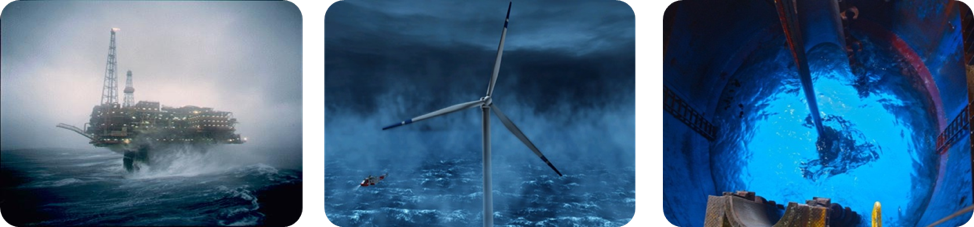
In many cases the absence of dedicated testing and simulation facilities to characterize the behaviour of materials and components under extreme or harsh real-life conditions, is a roadblock towards material driven innovations in asset-intensive sectors such as e.g. off-shore, dredging, deep-sea mining, renewables, power generation, oil&gas, … which leads to enhanced depletion of scarce materials and prevents a shift towards a more sustainable future.  The focus of the MaDurOS program is primarily on steel structures and more specifically on their behavior under combined durability conditions: the combination of corrosion and abrasion, the combination of corrosion and fatigue as well as the combination of all three. Within the scope of the EIT RawMaterials the MaDurOS project provides a one-stop-shop access to such unique equipment while also further enriching the existing set-ups by identifying testing blind spots and linking them to predictive simulation models as well as complementary competences.

The solution (technology)

  • Bring a unique and complete testing/simulation offer towards asset-intensive industries which will trigger application driven collaborative R&D projects aimed at reducing design conservatism in using and exploiting raw materials.
  • Through establishing a single-point-of-contact and compensation for discounted access price to facilitate the uptake, acceptance and access to the infrastructure.

Partnership

Substitution

MagNet: Magnetometry Network

Project duration: 1 April 2017 – 31 March 2020

Objective

The Magnetometry Network (MagNet) aims to bring together complementary European technical platforms and competence centers in the field of magnetism. At the first stage, the partners of this NoI will be located in France, Belgium, Italy, Spain, Germany, Poland, and Netherland. However, technically, the service can be provided to any customer in Europe since samples can travel by mail (or made in one academic MagNet partner’s lab) and video-conference can be used for R&D discussions.

The solution (technology)

Globally, the project will be divided into four main phases:
– A short one consisting of developing shared procedures to allow the consortium replying to customers requests and/or customers needs identified (proactive approach), including related IP issues.
– A marketing phase which will consist in increasing the number of customers, selling services based on the equipment and associated expertise identified within the consortium
– Realization of first service and R&D actions for new private partners
– R&D proposals to answer EIT RawMaterials up-scaling calls or other European calls will be initiated in order to form long-term R&D collaboration with new customers and bring MagNet closer to sustainability.

Partnership

  • Université de Lorraine (UL), France (Lead Partner)
  • Agencia Estatal Consejo Superior de Investigaciones Cientificas, CSIC (Spanish National Research Council), Spain
  • ArcelorMittal Maizières Research SA, France
  • ASTER S. Cons. P.A., Italy
  • Centre de Recherches Métallurgiques asbl (CRM Group), Belgium
  • Commissariat à l’énergie atomique et aux énergies alternatives, CEA (French Alternative  Energies and Atomic Energy Commission), France
  • Consiglio Nazionale delle Ricerche (CNR), Italy
  • Fraunhofer-Gesellschaft zur Förderung der angewandten Forschung e.V. (Fraunhofer), Germany
  • Institut polytechnique de Grenoble (Grenoble Institute of Technology, INP), France
  • Instytut Metali Niezelaznych, IMN (Institute of Non-Ferrous Metals), Poland
  • Katholieke Universiteit te Leuven (KU Leuven), Belgium
  • Stichting Katholieke Universiteit (Radboud University Nijmegen), The Netherlands
  • Technische Universität Darmstadt, Germany
  • Université de Bordeaux, France
  • Université de Liège, Belgium

Find more information on the project website