EIT RawMaterials Projects

The ambitious vision of EIT RawMaterials is realised by the creation of a structured collaboration within the Knowledge Triangle, which is the basis of the EIT model.

Call for Innovation & Education Projects is now open!

Learn more

EIT RawMaterials Projects Timeline

392 Projects
Project Portfolio
Innovation Themes
Innovation Areas/Lighthouses

Exploration

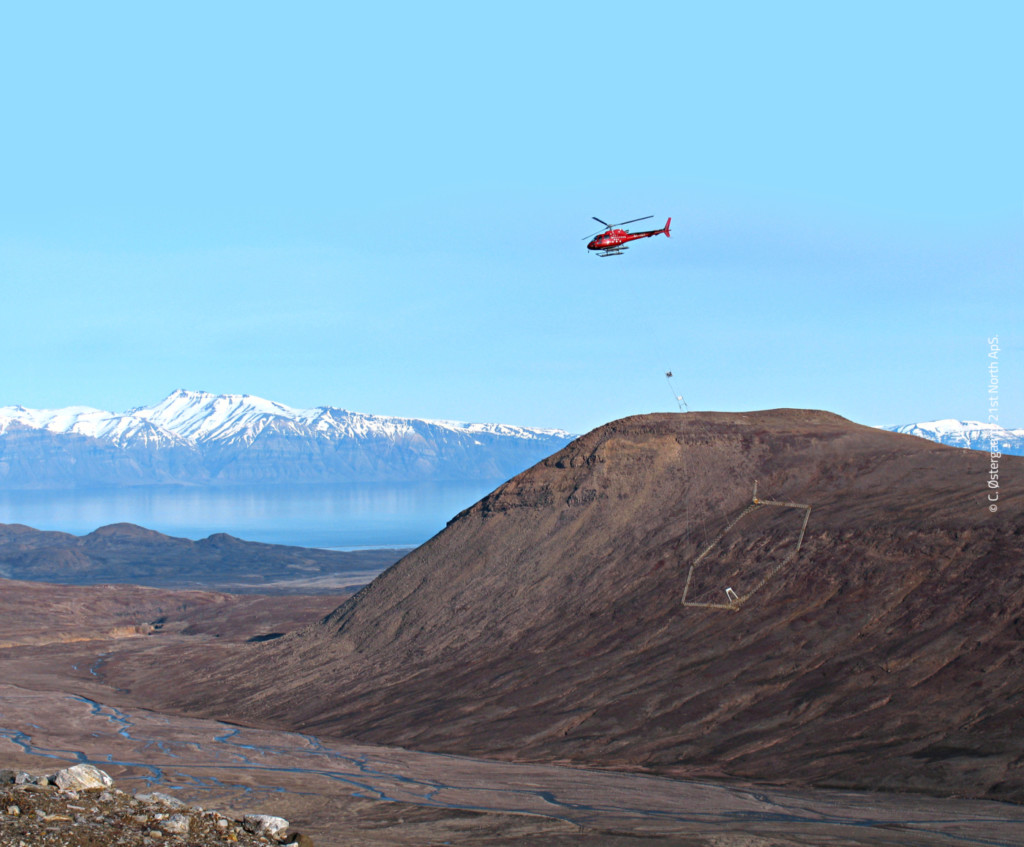
EUROCORE: European Core Sample Collection for Master Training
Project duration: 01 April 2017 – 31 March 2019

Objective

Regarding the evolution of the in situ exploration tools, this Eurocore KIC Master education proposal wants to assist the mining industry in the formation of students (Master, PhD) and mining companies staff, on the use of this innovative In Situ technologies for exploring metals from cores samples. Training people at the continent scale requires a full kit: core samples from various ore types, detailed knowledge on core, including its inside structure, field devices for training on manual measurements, automated data acquisition for providing large datasets management exercises, data management capabilities and ready-to-use workshops calling up teaching skills and methods. Target end-customers and/or key beneficiaries of the educational activity. The Eurocore KIC Master education proposal wants to assist the mining industry, from Junior to Major ones, on the use of innovative In Situ technologies for exploring metals from cores samples. Device suppliers will also benefit of this project, as WP3 and WP4 will develop and optimize the use of In Situ tools for mineralogical, geochemical and structural characterization. The educational centers, members of this EUROCORE consortium, will of course take advantage of this EUROCORE project and will feed their formation with the development of skills on capabilities and limits of each analytical technique regarding specific deposits. The research centers will also benefit of this consortium, in merging their experiences and strengths in order to deliver a common task force.

The solution (technology)

This activity may be easily open to the lifelong learning for the wider raw materials community, and easily duplicable for the geologists of the mining societies. The analytical benches developed here and methods used to cross data from one technique to another will be readily available for extension to other mining contexts at the European scale. Specific core sample collections to each regional context can be build built later and automated data collection performed for gathering large data sets. Further investment will hence be limited to portable devices availability, which can be done in collaboration with local mining companies. This proposal focuses on expertise transfer to field geologists.

Partnership

  • Université de Lorraine (UL), France (Lead Partner)
  • Centre de Recherches sur la Géologie des Matières minerales et energetiques (CREGU), France
  • Fraunhofer-Gesellschaft zur Förderung der angewandten Forschung e.V. (Fraunhofer), Germany
  • Geologian tutkimuskeskus, GTK (Geological Survey of Finland), Finland
  • Tallinna Tehnikaülikool, TTÜ – Tallinn University of Technology, Estonia
  • Universidad Politecnica de Madrid, UPM (Technical University of Madrid), Spain

For more information, please visit the project website.

Mineral Processing/Resource Efficiency

EWT-CYNCOR: Electrochemical water treatment for cyanide and nitrogen compounds removal

Project duration: 1 January 2017 – 31 March 2019

Objective

The aim of the EWT-CYNCOR is to upscale electrochemical cyanide and nitrogen removal process to TRL 7 a prototype to demonstrate a solution process that enables sustainable, flexible and cost-efficient polishing treatment of cyanide and nitrogen-containing process- and/or wastewaters within an operational environment.

This involves removing impurities from the process- and wastewaters enabling water recycling, decreasing environmental pollution, producing less solid waste than conventional water treatment options, and increasing sustainability and resource efficiency due to modularised, digitalised and removable water treatment process.

The solution (technology)

EWT-CYNCOR will develop polishing electrochemical treatment application for waters containing cyanide and/or nitrogen compounds. Technology will be demonstrated via laboratory scale tests (TRL5 to TRL 6) optimizing different operational parameters using real process and/or wastewater samples from mines and industry. Then, the treatment method will be upscaled to demonstrate the system prototype OT’s EWT-40 on-site (TRL 6 to TRL 7). Comprehensive treatment process will be developed testing also suitable S/L-separation technologies. The process is producing a low amount of solid product, of which stability and disposal/utilization will be evaluated. As the prototype EWT-40 can be directly up-scaled to industrial level due to the modularized solution, electrochemical water treatment process for cyanide and nitrogen compounds removal can be easily commercialized directly after the end of the EWT-CYNCOR project.

The solution proposed enables economically viable and sustainable water treatment process especially for mining and metal industry, securing raw materials supply. It is also digitalized solution collecting measurement data providing better monitoring, raw material management and efficient product service system providing new systemic ways of designing solutions. Proposed solution also enables water recycling and diminishing produced waste material that needs to be disposed aiming to close material loops.

Partnership

EXplORE: Masters Programme in Exploration

Project duration: 01 January 2018 – 31 December 2020

Objective

EXplORE aims to create an MSc programme in exploration involving AGH, LTU, Oulu and TU BAF together with the exploration industry. Exploration geoscientists will be educated in how to create exploration businesses and in understanding market conditions. By adding the necessary components of entrepreneurship in exploration and student and teacher exchange, we will provide students with the knowledge and skills required to boost exploration in Europe.

The solution (technology)

Europe is highly dependent on foreign imports  when it comes to metals and raw materials. While we consume over 20% of the global metals and minerals produced, we only supply around 3-4% from domestic mining. Furthermore, the share of global expenditure on exploration is small compared to other parts of the world, such as Australia, Canada, and South America. Contrary to popular belief, the geological potential for discovery of mineral deposits is very good and many parts of Europe are considered “underexplored” by international standards. Importantly, we are lacking in investments into exploration, and around Europe we see a declining trend in young people going into the raw materials industry. If this trend is not reversed, this will further increase import dependence and provoke a supply risk to European industry downstream – posing a serious risk to industry and society alike.

The EXplORE MSc-programme has the ambition to prepare skilled T-shaped professionals for the European exploration industry. We are doing this by pooling programmes from four of the leading resource universities in Europe, AGH in Poland, LTU in Sweden, University of Oulu in Finland and TU BAF in Germany, and by adding entrepreneurial components to their existing programmes. We will also establish a teachers’ mobility scheme to further the attractiveness of the programme to European as well as non-European students. An industrial advisory board to the programme will ascertain that all modules are state-of-the-art and in line with expectations from industry. We will furthermore enhance interaction with professionals from industry and elaborate on a scheme to include teachers from industry. Furthermore, we aim to to align internships and thesis work within industry in order to secure first hand working experience on an individual basis.

Partnership

For more information, please visit the project web page.

Substitution

EXTREME: Substitution of CRMs in components and coatings used under extreme conditions


Project duration: 15 March 2016 – 31 December 2018
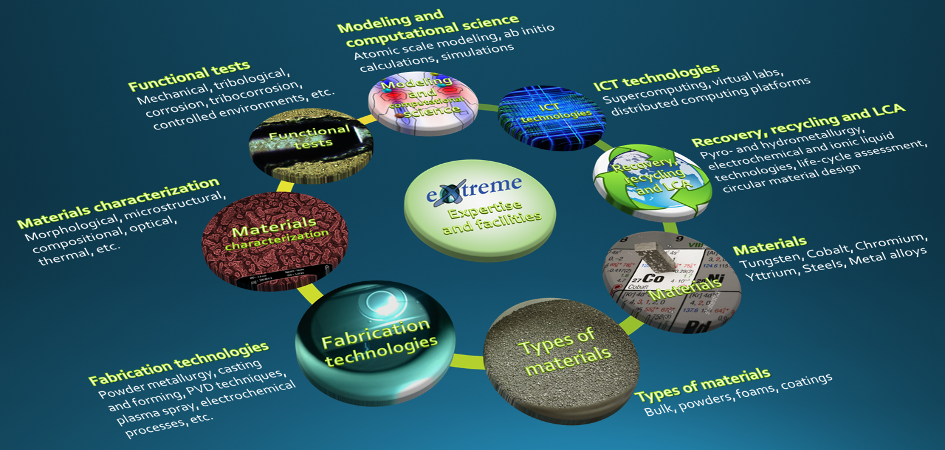
Substitution/reduction/optimization in the use of CRMs in components and coatings under challenging conditions of temperature, wear, friction, loading, corrosion, etc.

Objective

Development of new shared actions (e.g. new research projects), support to Education activities, and providing services to enterprises, industries and research institutions in the interested sectors (manufacturing, machining, transport, construction, energy, etc.)

The solution (technology)

Advanced equipment and high-level expertise of partners, able to provide support on: design and modeling of materials and products, development of materials (bulk and coatings) and related process optimization, characterisation and functional testing, recovery and recycling of materials, LCA.

Partnership

For more information, please check the official website of the project.
Circular Economy

FacadeReLog: Reverse Logistics for the Recovery of Metals in the Facade Industry

Project duration: 1 January 2020 – 31 December 2021

Objective

FacadeReLog is a lifelong learning (LLL) education project supporting the Circular Economy transition in the European façade industry.

The solution (technology)

A practical workshop and lifelong education series, co-created with key sector companies and branch associations, will close the knowledge gap in business models and industrial processes currently hindering the recovery of increasingly complex products and their valuable materials.

Partnership

  • Technische Universiteit Delft (Delft University of Technology), The Netherlands (Lead Partner)
  • VMRG, The Netherlands
  • Rheinisch-Westfaelische Technische Hochschule Aachen, RWTH Aachen, Germany
  • Leiden University, The Netherlands
  • Katholieke Universiteit te Leuven (KU Leuven), Belgium
  • Fundación Tecnalia Research & Innovation, Spain
  • Coventry University, United Kingdom
  • CAB, United Kingdom
  • ASEFAVE, Spain

For more information, please visit the project web page.

FAME-INNO: Functional Advanced Materials and their Engineering-Innovation

Objective

FAME INNO is a Master programme that will educate T-shaped professionals for the RM industry with an expertise in sustainable functional materials and an entrepreneurship mindset.

The solution (technology)

FAME INNO proposes to reshape the existing ERASMUS MUNDUS FAME Master program by adding to the T to have a program covering all areas of the knowledge triangle and covering the whole value chain of raw material at different levels of education in the Master.

Partnership

  • Institut polytechnique de Grenoble (Grenoble Institute of Technology, INP), France (Lead Partner)
  • Aalto-Korkeakoulusaatio (Aalto University), Finland
  • ArcelorMittal Maizières Research SA, Luxembourg
  • Arkema France, France
  • Centre National de la Recherche Scientifique-1 (CNRS-INP), France
  • Commissariat à l’énergie atomique et aux énergies alternatives, CEA (French Alternative  Energies and Atomic Energy Commission), France
  • Fraunhofer-Gesellschaft zur Förderung der angewandten Forschung e.V. (Fraunhofer), Germany
  • Interuniversitair Micro-Electronica Centrum vzw, IMEC (Interuniversity Microelectronics  Centre), Belgium
  • Technische Universität Darmstadt, Germany
  • Université de Bordeaux, France
  • Université de Liège, Belgium
Exploration

FARMIN: Field Augmented Reality in Mineral Exploration and Mining

Project duration: 1 January 2020 – 31 December 2022

Objective

This project aims to develop an augmented reality (AR) solution that visualizes 3D geological data and allows exploration and mining professionals to modify models in the field. FARMIN will improve exploration success rates, reduce costs and lead times, and improve stakeholder communication. AR is a high growth industry and will drive new innovation in the exploration sector, which is in need of high data precision and efficiency.

The solution (technology)

Knowledge of the exact location and depth of valuable mineral deposits below the earth’s surface is the basis for any successful exploration and mining operation, but also one of the greatest challenges. Accurate geological observations and data are needed to build a 3D model of the subsurface and, on the basis of this model, to accurately target such mineralizations. Accuracy is important since a fewer number of highly expensive diamond drill holes are needed to subsequently verify the existence of a mineralization.
Geological data are typically collected in the field, whereas 3D geological models are constructed using an office computer. Since the model is only available on the computer without seeing the rocks in the field, it is difficult to test how accurately the model resembles the real geological situation. The FARMIN project aims to build a smartglasses device app (based on, for instance, Microsoft HoloLens), with which mining professionals can take the geological model to the field, visualize it in its exact location and test if it resembles accurately the configuration of the rocks in nature. If inaccuracies are discovered, the user will even be able to make necessary modifications to the model directly, without having to take notes and to adjust the model later in the office.

The product represents a radical upscaling innovation that will help to save working time, improve the quality of the geological models, and thereby facilitate decisions and decrease costs in exploration projects and mining operations. In addition, geological work results can be shown directly in the field to other mining professionals, managers or other stakeholders, which makes important work results much easier to comprehend and improves the general communication and understanding of geology.

Partnership

  • Boliden Mineral AB, Sweden
  • DMT GmbH & Co. KG, Germany
  • LTU Business AB, Sweden
  • Minas de Aguas Teñidas SAU, Spain
  • Rheinisch-Westfaelische Technische Hochschule Aachen (RWTH Aachen), Germany
  • Robotic Eyes GmbH, Austria
  • Terranigma Solutions GmbH, Germany
  • Luleå University of Technology (LTU) (Lead Partner), Sweden
Substitution

FASTRAM: Upscaling of FAST sintering processes for the substitution of critical materials: W and Co

Project duration: 1 April 2017 – 31 March 2020

Objective

The main objective of the project FASTRAM is the up-scaling of FAST techniques for the production of sustainable hard materials, for substituting existing hard metal (WC-Co) in the selected particular applications.Europe’s share of the world’s primary and secondary tungsten consumption is estimated to be 12 000 tonnes or 13 % of the world total of 90 000 tonnes for 2011, and 74 % of it is imported. New market areas will enable investments for production facilities and that way open possibilities to participate also to the larger invitation of tenders. For AMES the main driver is also to find new business areas. AMES is a producer of PM metal parts for different sectors. The introduction of products in the mining sector will be very interesting for the company. The production of new products will open the possibility of increasing the production lines.For Metso, hard materials containing no W or Co would be desired also due to their role in REACH and in Conflict mineral listings.

The solution (technology)

The FASTRAM project will strengthen the competitiveness of industries across Eu-rope and contribute to increased employment and growth, mainly focused on mining sector. From R&D; centres and universities, to material suppliers, component manufacturers and final users. It is a key point of the FASTRAM project to provide knowledge, skills and technology for the design of new sustainable hard metals using advanced technologies that respond to end-user needs.After a successful up-scaling process, it is an aim of the project is not only to facilitate the growth of the partners of the project but also to be a springboard for supporting people with ideas to create start-ups. FASTRAM project also embraces the principles of sustainability (sustainability in terms of the elimination of hazardous and possible carcinogenic materials like cobalt). FASTRAM is focused in the mining sector, but the development achieved within the project will affect the KIC community in general. In the near future, the development can be easily adapted for other sectors like cutting tools or other sectors.

Partnership

  • Fundación Tecnalia Research & Innovation, Spain (Lead Partner)
  • Aleaciones de Metales Sintetizados, S.A. (AMES), Spain
  • Exote Oy, Finland
  • H.C. Starck GmbH, Germany
  • Metso Minerals Oy, Finland
  • Teknologian tutkimuskeskus VTT (Technical Research Centre of Finland Ltd. VTT), Finland

For more information please, visit the official website of the project.

Sustainable Mining

FIREM-II: Fire and Rescue in Mines II

Project duration: 1 January 2019 – 31 December 2021

Objective

Fires in mines represent great challenges for the first responders. It can cause losses in human lives, production loss and large costs due to standstill. One of the largest challenges for first responders in case of a fire is the long response routes from ground level to the scene of the fire. Fires in hard rock mines are mainly related to vehicles; machines or equipment and more effective firefighting, adapted to the requirements in the challenging underground mining environment, could prevent fires to spread in and between vehicles. Fewer developed fires will result in lower costs, less risk exposure of mining personnel and first responders and lower risk for goodwill losses.

The solution (technology)

The FIREM II-project aims to further develop remote-controlled firefighting to support the limitation of fire-related costs and damages, by addressing the challenges, creating close research-practitioner cooperation and involving the stakeholders in the process. By using on-site vehicles, merging and further developing emerging technologies and methods within the two thematic fields – firefighting and remote control – the response time for firefighting actions will be shortened and mitigation of the consequences improved. The project will deliver standards for remote-controlled firefighting, construction equipment-mounted remote-controlled firefighting units and training methods for mining personnel and first responders.

Partnership

  • RISE Research Institutes of Sweden AB, Sweden (Lead Partner)
  • Boliden Mineral AB, Sweden
  • Dafo Vehicle Fire Protection AB, Sweden
  • DMT GmbH & Co. KG, Germany
  • Fogmaker International, Sweden
  • LTU Business AB, Sweden
  • Luleå University of Technology (LTU), Sweden
  • Luossavaara-Kiirunavaara AB, LKAB, Sweden
  • Mälardalen University, Sweden
  • Örebro University, Sweden
  • Politechnika Slaska (Silesian University of Technology), Poland
  • RISE Research Institutes of Sweden Holding AB, Sweden
  • Robotdalen (Mälardins högskola), Sweden
  • Volvo Construction Equipment, Sweden