EIT RawMaterials Projects

The ambitious vision of EIT RawMaterials is realised by the creation of a structured collaboration within the Knowledge Triangle, which is the basis of the EIT model.

Call for Innovation & Education Projects is now open!

Learn more

EIT RawMaterials Projects Timeline

392 Projects
Project Portfolio
Innovation Themes
Innovation Areas/Lighthouses

EC-Geo-Sustain: European MSc in Geomatics for Sustainable Mineral Resource Management

Project duration: 1 April 2018 – 31 December 2020

Objective

The European Course on Geomatics for Sustainable Mineral Resource Management combines exciting education linked to recent research, leading universities, the most modern educational practices and training in professional, personal and entrepreneurial skills. The focus on geomatics combines gathering, storing, processing, and delivering geographic information or spatially referenced information, tailored to the needs of the mineral resource industry.

The solution (technology)

A growing world population and technological development will require a continuous supply of raw materials. To meet this global demand, it will be necessary to progress the extraction of mineral resources in areas of the geosphere, which are more difficult to access and characterised by increased mining and geological complexity, and harsher working conditions. At the same time, the primary objectives of ensuring the highest level of operational and public safety, complying with all environmental and social regulations/ boundary conditions and also making optimal use of natural resources by maximising recovery, will remain. The basis for this is the use of the most modern sensing technologies for geo-data acquisition and geo-data management, state-of-the-art methods for information extraction and analysis and the assimilation of this information in digital 3D decision making models, such as resource and mining subsidence prediction models.

The European Course on Geomatics for Sustainable Mineral Resource Management aims to develop a European MSC course that develops future leaders and innovators in this field. The educational content focuses on the following pillars:

  • Sensing technologies for mine data gathering,
  • Spatial (big) data management and visualisation
  • Spatial (big) data analysis and modelling.

The integration of the three pillars to innovative Geo-monitoring concepts by the means of multinational group projects, will focus on competency development in more complex levels of educational learning, in particular case specific evaluation, analysis of technologies and methods to create case specific and new holistic concepts. Students will be exposed to most recent research originating from several large H2020 projects. The implemented interaction with several local industry partners will allow students to work on real projects, understand industry needs and be trained on entrepreneurial skills. With a guided but flexibly designed exchange program between involved Universities, students will be exposed to different fields of expertise and cultural environments. Graduates are expected to be the future leaders in the field of technology development and innovation bringing modern geomatics concepts to marketable products for a secured future in the mineral resource industry.”

Partnership

For more information, please visit the project web page.


ECLCProSchool: CLC-EAST Professional School

Objective

Developing an interlinked course program.

The solution (technology)

Teaching the state of the art with a didactic concept tailored for the industrial environment.

Partnership

  • Technische Universität Bergakademie Freiberg (TUBAF), Germany (Lead Partner)
  • AGH University of Science and Technology, Poland
  • Montanuniversität Leoben, Austria
  • Technische Hochschule Nürnberg Georg Simon Ohm, Germany
  • Wroclawskie Centrum Badan EIT plus Sp. z o.o. (EIT+), Poland

For more information, please visit the project web page.

Substitution

ECO COM’BAT: Ecological Composites for High-Efficient Li-Ion Batteries
Project duration: 1 April 2016 – 31 December 2018

Objective

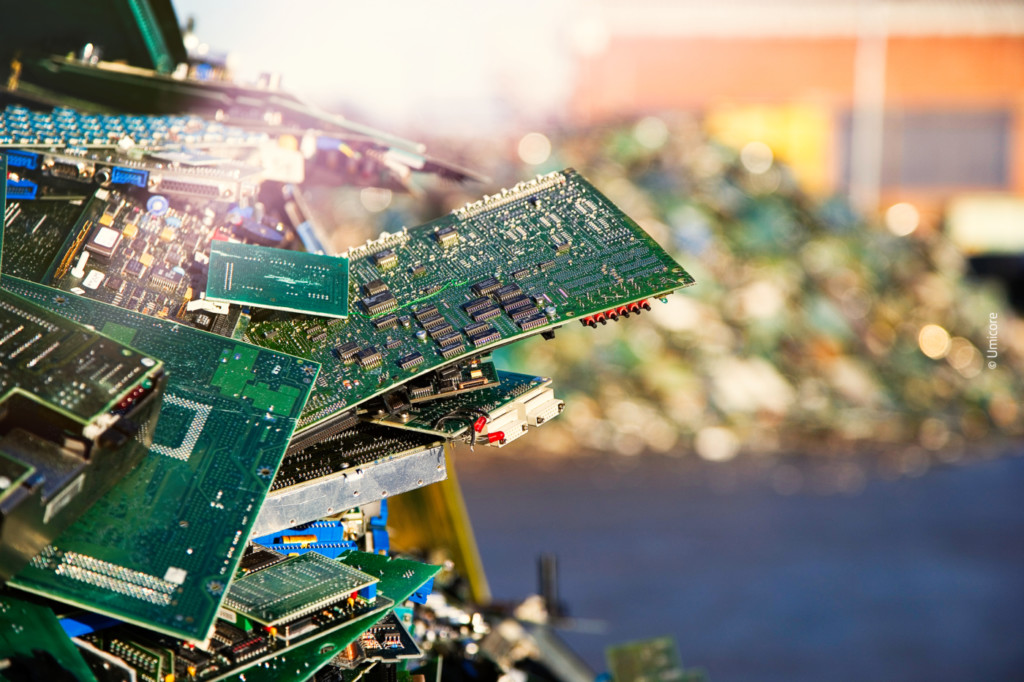
The energy and mobility industry strongly depends on lithium-ion batteries as mobile energy storage devices for electric vehicles, electric bikes, or as stationary storage systems for solar cells or wind turbines. These batteries contain many precious and critical raw materials, e. g. cobalt and fossil resource-based graphite. So the large and still increasing markets energy supply and mobility run into resource scarcity. This resource scarcity will become even more relevant in future if we do not find efficient and sustainable substitutes for those materials.
In effect there is a requirement to find solutions for new battery materials with reduced amounts of critical raw materials and with higher energy and power density, higher output voltage and longer cycle life as well as production processes that are green, sustainable, and economic.
Thus, the objective of the project ECO COM’BAT is the combination of the latest developments of green and high-performance materials to produce the next generation of lithium-ion batteries, the so called high-voltage batteries.

The solution (technology)

For this purpose, the materials have to be up-scaled to pilot and later industrial scale. By involving actors along the whole value chain and from each part of the knowledge triangle (including task partners CCI as SME and SAFT as end user for batteries) the newly developed battery materials will be produced and processed to electrodes and battery cells. Their performance will be modelled and finally tested with specifications of SAFT.

Partnership

  • Fraunhofer-Gesellschaft zur Förderung der angewandten Forschung e.V. (Fraunhofer), Germany (Lead Partner)
  • Agencia Estatal Consejo Superior de Investigaciones Cientificas, CSIC (Spanish National Research Council), Spain
  • Agenzia Nazionale per le Nuove Tecnologie, l’Energia e lo Sviluppo Economico Sostenibile (ENEA), Italy
  • Arkema France, France
  • Commissariat à l’énergie atomique et aux énergies alternatives, CEA (French Alternative  Energies and Atomic Energy Commission), France
  • Custom Cells Itzehoe GmbH (CCI), Germany
  • SAFT Incubator, France
  • Technische Universität Darmstadt, Germany
  • UMICORE NV, Belgium
  • Vlaamse Instelling voor Technologisch Onderzoek NV – (Flemish Institute for Technological Research NV VITO), Belgium

For more information, please visit the project website.

Recycling

ECOPADS: Eliminating COpper from brake PADS and Recycling
Project duration: 1 January 2018 – 31 March 2020

Objective

The main concerns on vehicular traffic pollution are most of the times associated to emissions of exhaust gases from internal combustion engines. The Project is addressing another important issue concerning vehicle emission, that is the wearing out of disc brake materials. Indeed, brakes, tires, asphalt are all important sources of a large fraction of the total emission of particulate matter from road traffic, although usually they are not regarded as such by the public opinion.

This aspect should attract more attention instead, since all the mentioned emission sources will be there and gain increasing relevance with the widespread diffusion of hybrid and fully electrical engines, and corresponding further reduction or elimination of engine exhaust emissions.

The solution (technology)

ECOPADS intends to develop new brake pads for road vehicles featuring copper-free friction material, in order to eliminate the main source of copper released in urban areas. This will beneficially influence human health and environmental conditions. The novel brake pads will be certified as concerns not only the brake performances but also the particulate matter emission and a complete recycling route.

Partnership

  • Università degli Studi di Trento, Italy(Lead partner)
  • Brembo S.p.A, Italy
  • Hub Innovazione Trentino S.c.a.r.l. (HIT), Italy
  • Royal Institute of Technology (KTH), Sweden
Circular Economy

ECOS. E-mobility cost study – The cost of mobility

Project duration: 10 May 2019 – 31 December 2019

Objective

The main target of the project is to define the real cost of e-mobility; effects of environmental, monetary and social aspects on the overall footprint of e-mobility. In the first part, the literature survey and analysis, existing information is evaluated and gaps along the whole value chain are recognized. Key issues being environmental LCAs, ethical sourcing and avoiding child labour. Another key objective is to find out how important responsibly produced raw materials (Co, Ni, Nb, Li, REE etc.), electric engines and batteries are to different actors in the e-mobility value chain. Are different sustainability aspects considered when buying the materials? The deliverable of this project is a final report which is highly beneficial for EIT RawMaterials in implementing its own strategy as well as identifying and highlighting the future needs and improvement areas for upcoming KAVA calls and other project themes.

The solution (technology)

The deliverable of this project is a final report which is highly beneficial for EIT RawMaterials in implementing its own strategy as well as identifying and highlighting the future needs and improvement areas for upcoming KAVA calls and other project themes.

Partnership

  • Suomen Malmijalostus Oy, Finland (Lead Partner)
  • Bureau de Recherches Géologiques et Minières, BRGM (The French geological survey), France
  • Commissariat à l’énergie atomique et aux énergies alternatives, CEA (French Alternative Energies and Atomic Energy Commission), France
  • Fraunhofer-Gesellschaft zur Förderung der angewandten Forschung e.V. (Fraunhofer), Germany
  • Helmholtz-Zentrum Dresden-Rossendorf e.V. (HZDR), Germany
  • Katholieke Universiteit te Leuven (KU Leuven), the Nertherlands
  • Teknologian tutkimuskeskus VTT (Technical Research Centre of Finland Ltd. VTT), Belgium
  • Université de Bordeaux, France
  • Université de Lorraine (UL), France
Recycling

ElectroFlex: (Bio)Electrochemical extraction and recovery of metals from low grade ores and residues

Project duration: 1 April 2017 – 31 March 2020
Objective

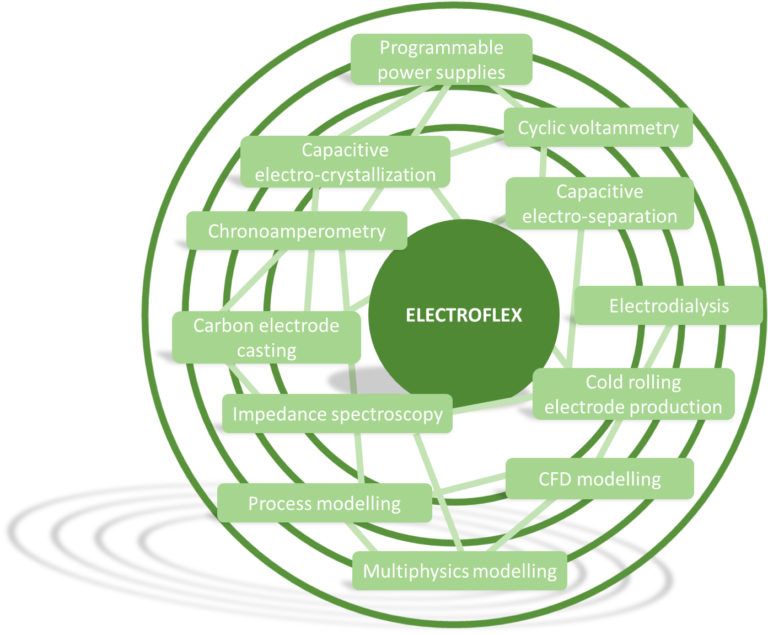
The ElectroFlex project intends to lower the barrier to innovation for customers/companies in the field of electrowinning and electro-separation techniques for complex, low-grade raw materials and residues by offering access to one-of-a-kind, key infrastructures and services organised in a network of top-level universities, research institutes and companies.

The solution (technology)

A single-point-of-contact will be installed to act as coordinator or hub of the network to set-up, manage, operate and promote the network in a transparent and efficient way. In addition the coordinator will install a follow-up process to guide and connect customers to other KAVA activities. De-silo expertise by initiating community building and facilitating a mutual learning process among the partners by sharing best practice at workshops, meetings and through collaborative projects, will lead to excellence of the network at the European and global stage. Smart specialisation will be stimulated by the partners by making an inventory of the available infrastructure within the network, the KIC and Europe and by organising interactions with stakeholders to define their needs and identify gaps in key infrastructure to be filled by the network/KIC in follow-up projects or investments.

Partnership

  • Vlaamse Instelling voor Technologisch Onderzoek NV – (Flemish Institute for Technological Research NV VITO), Belgium (Lead Partner)
  • Aalto-Korkeakoulusaatio (Aalto University), Finland
  • Chalmers tekniska högskola AB (Chalmers University of Technology), Sweden
  • Ghent University, Belgium
  • Katholieke Universiteit te Leuven (KU Leuven), Belgium
  • Rheinisch-Westfaelische Technische Hochschule Aachen, RWTH Aachen, Germany
  • Stichting Wetsus European Centre of Excellence for Sustainable Water Technology, (Wetsus), The Netherlands
  • Technische Universität Bergakademie Freiberg (TUBAF), Germany
  • Teknologian tutkimuskeskus VTT (Technical Research Centre of Finland Ltd. VTT), Finland
  • UMICORE NV, Belgium

For more information, please check the project website.
Exploration

ELI: European Lithium Institute

Project duration: 1 January 2019 – 31 December 2020

Objective

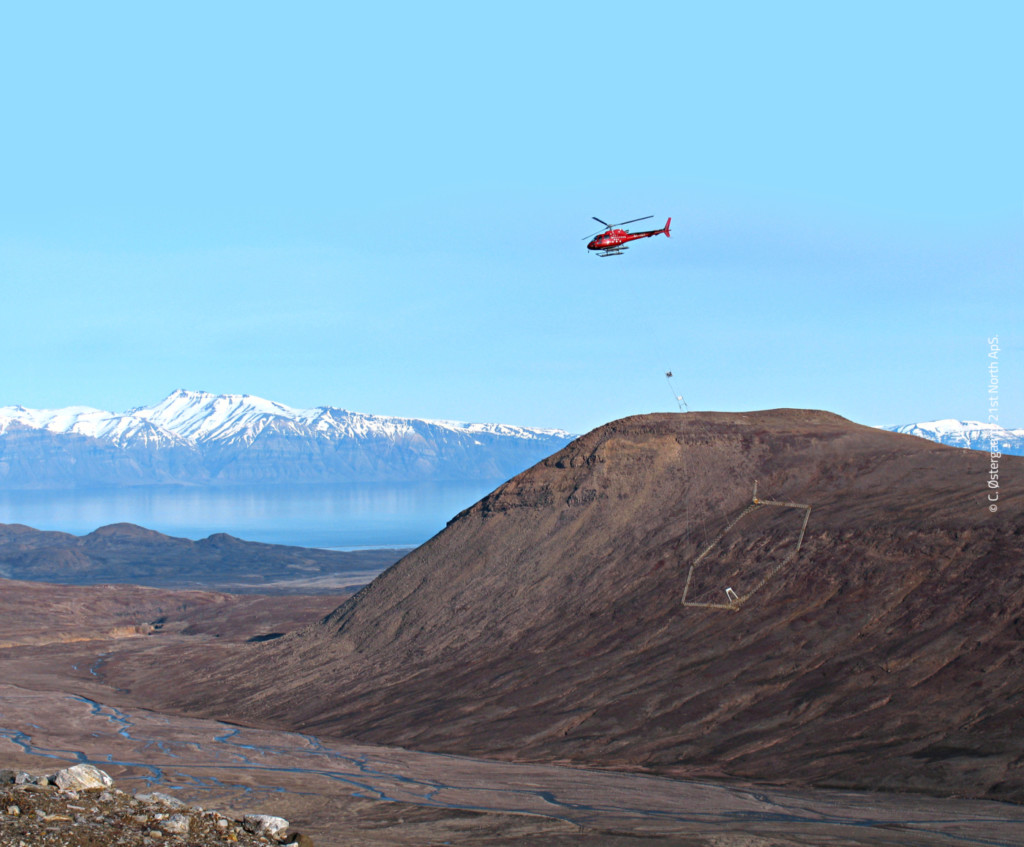
Driven by the European energy transition and electric mobility the demand for lithium is rapidly growing and current European resources are limited or just in the exploration phase. To reduce Europe’s dependency on lithium and related critical energy materials, novel approaches are necessarily based on a circular economy and international networks as well as new recycling, processing and exploration solutions.

The solution (technology)

ELI will gather partners active in the complete value chain of Li-based technologies (including working on the limits of cobalt, nickel and other battery materials) to generate focused cooperation and innovative research projects aiming to solve existing issues concerning lithium, as well as the problems that can arise in the future. The consequently no longer missing comprehensive information should enable a bit of more focused advice to decision makers in politics and industry.

Partnership

  • Fraunhofer-Gesellschaft zur Förderung der angewandten Forschung e.V. (Fraunhofer), Germany (Lead Partner)
  • Bureau de Recherches Géologiques et Minières, BRGM (The French geological survey), France
  • Centre National de la Recherche Scientifique-2 (CNRS-UB), France
  • Commissariat à l’énergie atomique et aux énergies alternatives, CEA (French Alternative Energies and Atomic Energy Commission), France
  • Helmholtz-Zentrum Dresden-Rossendorf e.V. (HZDR), Germany
  • Katholieke Universiteit te Leuven (KU Leuven), Belgium
  • Université de Bordeaux, France
  • Université de Lorraine (UL), France

EMC-AVSA Grants: Added-value student activity grants for the European Mining Course (EMC) EIT-labelled Master’s programme, cohorts beginning September 2017 and September 2018

Objective

To increase the accessibility of valuable extra-curricular activities for students in the mining and raw materials field.

The solution (technology)

The ‘Added value student activities grant’, covers travel and subsistence costs for students enrolled in an EIT RawMaterials funded programme to participate in the following activities:

  • industry placements and other internships,
  • exchanges with other universities,
  • attending conferences or workshops,
  • similar activities additional to the regular programme contents directed at promoting the learning, knowledge, skills, professional flexibility and pursuit of careers of students during and after having passed the EIT RawMaterials-funded programme.

Partnership

EMC-GCP: European Mining Course Game Changer Programme

Project duration: 01 January 2019 – 31 December 2020

Objective:

The European Mining Course wishes to attract and educate game changers for the mining industry. These students will have to understand, experience and be empowered by the mining industry in a cross-disciplined manner, achieved in this project by

  • Teaching and organization conducted in an entrepreneurial spirit
  • A cross-programme industrial case study,
  • Empowering field trips, and
  • A challenging recruitment campaign.

The solution (technology):

The European Mining Course (EMC) – a two year Master of Science Programme in mining engineering – aims at challenging the mining industry to outperform itself. The EMC realizes this by educating future mining engineers to be critical thinkers, innovators who challenge the status quo from inside or outside a company.

Building on over 20 years of experience, the EIT-Labelled EMC Master Programme has initiated this EMC-GCP project to further strengthen the programme to deliver the mining engineers of the future to European industry. The project establishes a strong entrepreneurial focus in the programme by incorporating business-oriented case studies provided by industry, taught to both student and teacher. Interactive field trips provide practical insights for a multitude of case studies, enabling students to contextualize the theory in real world industrial settings. Furthermore, the project strengthens the recruitment process, by including an industry challenge to attract future game changers via online media and international MSc programme fairs. Finally, the project will bring together students from three EIT Label Master programmes – EMerald, SiNREM and EMC – all addressing different raw materials disciplines, to collaborate on industrial case studies and further build the EIT Label student community.

Partners:

Technische Universiteit Delft (Delft University of Technology), Netherlands (Lead Partner)
Aalto University Executive Education Oy, Finland
Aalto-Korkeakoulusaatio (Aalto University), Finland
Rheinisch-Westfaelische Technische Hochschule Aachen (RWTH Aachen), Germany
Sandvik AB, Sweden
Sandvik Mining and Construction Oy, Finland

For more information, please visit the project website.