EIT RawMaterials Projects

The ambitious vision of EIT RawMaterials is realised by the creation of a structured collaboration within the Knowledge Triangle, which is the basis of the EIT model.

Call for Innovation & Education Projects is now open!

Learn more

EIT RawMaterials Projects Timeline

392 Projects
Project Portfolio
Innovation Themes
Innovation Areas/Lighthouses

Mineral Processing/Resource Efficiency

Credit: Chemical recycling through electrodialysis treatment

Project duration: 15 October 2018  – 31 December 2021

Objective

The Credit project will develop a novel technology concept for water treatment and chemical recovery of highly concentrated low-value sulfate waste from a battery chemical plant. The project will provide an economically feasible bipolar membrane-based technology concept for acid and base production, which reduces environmental discharge. The demonstration and scale-up at the Sotkamo mine will provide the first reference to Suez for marketing the concept.

The solution (technology)

The project aims to scale-up bipolar electrodialysis (BPED) technology for recycling sodium sulfate in hydrometallurgical processes by converting it to sodium hydroxide and sulfuric acid. Tightened regulations for the release of sodium sulfate to the environment, its low value with high processing costs and the savings in chemical costs are the key issues for recycling. The amount of sodium sulfate waste in mines and mineral processes will grow considerably in the future as the need of battery chemicals for energy storage and electric vehicles is continuously increasing.

BPED enables efficient recycling of process chemicals resulting in economic and environmental benefits including higher utilization of raw materials and less waste and discharge from hydrometallurgical processes in general. The concept is well in line with the advancement of the circular economy strategy giving new prospects for boosting European innovations and new business opportunities within the raw materials sector. There are potentially 250 mines in Europe that could utilize the process.

Successful up-scaling of the proposed technology would enable a more advanced treatment of sodium sulfate-containing waste streams compared to the existing conventional ones such as evaporation and crystallization.

Partnership

  • Teknologian tutkimuskeskus VTT (Technical Research Centre of Finland Ltd. VTT), Finland (Lead Partner)
  • Aalto-Korkeakoulusaatio (Aalto University), Finland
  • SUEZ Groupe SAS, France
  • SUEZ Water Technologies and Solutions, Belgium
  • Suomen Malmijalostus Oy (formerly Terrafame Group Oy), Finland

CRITICALC : CRITICALity Lifelong Learning Course

Objective:

We develop a modular teaching programme on managing supply chain risks related to critical materials for business representatives/SMEs, MSc and PhD level students, supported by a web-based ‘criticality scanner’ based on an existing Dutch tool. The programme will be tested with over 250 students.

The solution (technology):

Assessing the criticality of materials as input into production processes is crucial for companies, countries and economic blocs like the EU. Disruption of supply of critical materials can put hundreds of billions of euros of the EU’s export value at risk. It is hence crucial that supply chain managers in companies, and policy makers at country and EU level, can identify supply risks and mitigate them. This proposal will build an education programme on criticality assessment that can be used and will be tested in the context of MSc, PhD and lifelong learning programmes of the project partners and the KIC.

Learning objectives are to understand what makes materials critical, how to assess criticality, to analyse economic and other implications of criticality at company, sector and country level, and to develop strategies to reduce criticality risks. TNO has a criticality assessment tool available developed for Dutch SMEs (‘grondstofscanner’ or ‘raw materials scanner’) that will be translated and expanded to and international context to support this course. During the project we will test the course with over 250 students. The lifelong learning version will be offered commercially after the end of the project, resulting in a likely financial backflow.

Partners:

Leiden University, Netherlands (Lead Partner)
Chalmers tekniska högskola AB (Chalmers University of Technology), Sweden
Fraunhofer-Gesellschaft zur Förderung der angewandten Forschung e.V. (Fraunhofer), Germany
Nederlandse Organisatie voor Toegepast Natuurwetenschappelijk Onderzoek, TNO (Netherlands Organisation for Applied Scientific Research), Netherlands

For more information, please visit the project web page.

CRM-ELV: Briding ELV and WEEE Treatment for the Recovery of Critical Metals

Objective:

More and more vehicles are using CRM for increasingly technical components. Included materials are not recovered on a large scale because the ELV sector often lacks knowledge on which components to dismantle and how. CRM-ELV combines ELV and WEEE recycling knowledge to provide material for 5 vocational training courses for ELV recyclers. Outcomes will be integrated into the Intern. Data Mgmt System and set economic incentives to increase CRM recovery.

The solution (technology):

Materials such as gold, silver, palladium etc. are generally not yet recovered on a large scale because the ELV sector is often lacking the specific knowledge on which components to dismantle and how. The main objective of this project is to combine ELV and WEEE recycling knowledge and to provide vocational training material for end-of-life vehicle recyclers, which will be tested in at least 5 end-of-life vehicle recycling workshops. This will set economic incentives to increase the recovery of precious metals.

Partners:

Wuppertal Institut fuer Klima, Umwelt, Energie GmbH (Wuppertal Institute), Germany (Lead Partner)
bvse Associations Sekundärrohstoffe und Entsorgung e.V., Germany
Kaerger, Germany
Technische Universiteit Delft (Delft University of Technology), Netherlands
Teknologian tutkimuskeskus VTT (Technical Research Centre of Finland Ltd. VTT), Finland

For more information, please visit the project website.

CycleSME: Digitally Enhanced Circular Economy Approaches for SMEs

Objective:

Industrial waste streams of SMEs have to be treated more effectively to close material cycles. Currently, amounts generated are too low to allow for separate collection and treatment. Industry 4.0 applications are a key enabler but SMEs lack access to relevant knowledge. The project will design lifelong learning based on an analysis of industry needs, conduct training workshops with SMEs and develop concepts for business models.

The solution (technology):

The project will design lifelong learning based on an analysis of actual industry needs, conduct training workshops with SMEs and develop concepts for future business models in this area.

Partners:

For more information, please visit the project web page.

DERMAP: DEsign of components in a critical Raw MAterials Perspective

Objective

DERMAP is an in-field training program leading industrial designers towards a more responsible materials selection process (MSP). Currently, materials are selected with no integration between performance, supply risks and sustainability requirements. DERMAP wants to fill this gap by:

  • Developing pilot training instruments for MSP based on CRM issues
  • Carrying out courses to implement them
  • Supporting & monitoring selected industrial companies

The solution (technology)

Most materials are drawn from the minerals of the earth’s land masses and oceans. The resource base from which they are drawn is large, but it is not infinite. Its magnitude is not easy to estimate so that at any point in time, only a fraction of it, the reserve, is established as accessible and economically viable. Market forces, when they operate properly, ensure that reserves remain adequate, keep supply in line with demand, and ensure that prices remain stable and fair. The balance between supply and demand can, however, be disrupted. Depletion of the resource base causes scarcity, driving up prices. Reserves that are localised can become vulnerable to cartel action or cut off by local political unrest. In this scenario, strategies are needed to overcome such incoming problems related to materials supply, classified by governments as ‘strategic’ or ‘critical’.

Materials are today selected in mechanical design with no integration between performance, supply risks and sustainability requirements. Starting from the design process, strategies such as recycling, substitution or material-efficient design must be taken into account. DERMAP Project is aimed at leading industrial designers towards a more responsible materials selection process, taking into account the criticality issues of Raw Materials. During its 2 years of duration, DERMAP will develop pilot training instruments with educational contents for materials selection, based on CRM issues. Courses at industrial level, to implement these tools and to sensitise the designer to CRM related problems, will be carried out. Finally, DERMAP will support and monitor selected industrial companies, which will act as testers of the pilot software tools.

Partnership

For more information, please visit the project website.

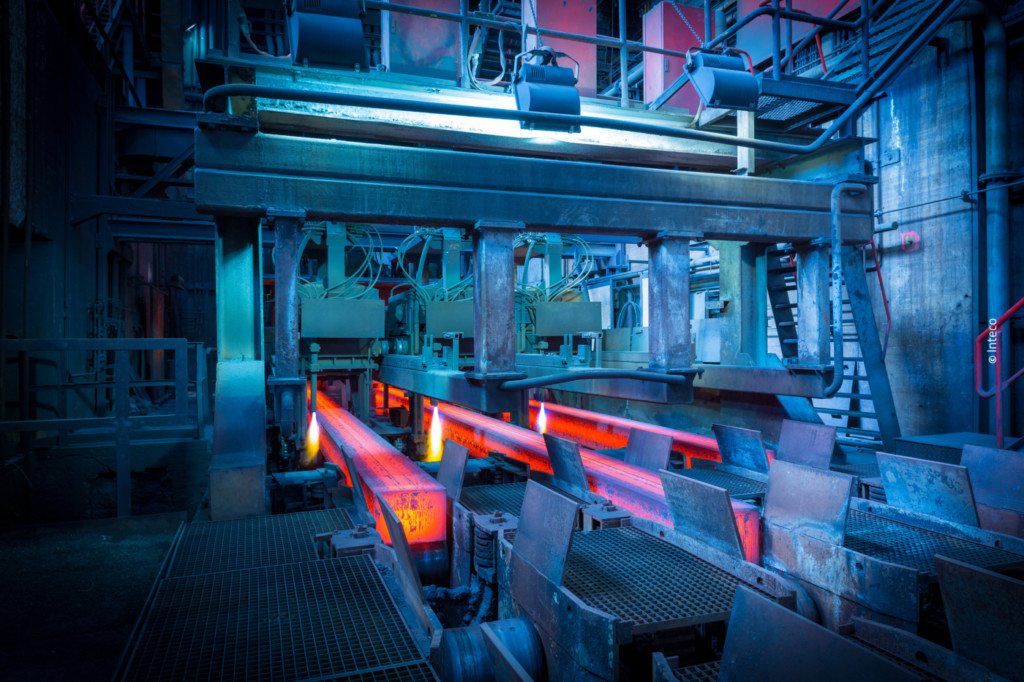
Mineral Processing/Resource Efficiency

DESULF: Gas Desulfurization by Steel Industry Side Streams

Project duration: 1 January 2020 – 31 December 2022

Objective

Steel industry generates masses of ZnO based side streams. Simultaneously, ZnO based H2S adsorbent materials are manufactured expensively from primary raw materials. This project will tackle this dilemma: ZnO containing side streams are converted to adsorbents. In the DESULF project, the promising lab-scale H2S adsorption results for side stream adsorbents are up-scaled to pilot scale. Consortium covers the entire value chain for new business.

The solution (technology)

ZnO pellets are used as sulphur absorbents for synthesis gas from biomass gasification, coking gas from steel production and biogas. Due to the high price of absorbing pellets based on primary ZnO powders, e.g., the gasification process is not always economically viable. Simultaneously, large amounts of Zn-containing side streams are generated in steel industry, with poor profitability of recycling. In the worst case, the side streams are disposed as hazardous waste, which is very costly. By substituting at least part of the primary ZnO by steel industry side streams, the price of absorbing pellets can be lowered significantly. Conducted lab-scale experiments have shown that absorbents based on steel industry side streams have sulphur absorption properties comparable to primary ZnO. The challenge is how to transfer the results from lab to industrial scale in an economically feasible way and create new business. The aim of the project is to tackle this challenge.

The project will create new business opportunities for companies. In Finland (with 10 gasification based syngasplants in future*), the estimated need for ZnO absorbents is 5 000 t/a for the production of synthesis gas. The target price for pellets is approximately 2.5 €/kg, thus the size of market only in Finland reaches 12.5 M€. Even if only 20% of the gasification plants in the world would use ZnO based sorbents, that would mean approximately 70 M€ market. In addition to targeting the customers in the gasification sector, other industry operators with such process or emission gases that contain small amounts of H2S are potential clients of the new H2S adsorbent materials. Such customers may be found in, e.g., oil and gas industry, steel industry (coking process of steel), anaerobic digestion processes (biogas, treatment of waste and sludges, food industry, energy production) and other types of energy generation processes (combustion gases). For example, only the anaerobic digestion market is expected to reach 8000 M€ by the year 2024. Given that the energy consumption is expected to grow steadily in the future, the target market of the EAF dust based H2S adsorbent material is foreseen to undergo systematic growth.

Partnership

  • Technical Research Centre of Finland Ltd. VTT (Lead Partner), Finland
  • ArcelorMittal Maizières Research SA, France
  • BioA, Finland
  • Boliden Kokkola Oy, Finland
  • Catalyco, Latvia
  • Höganäs AB, Sweden

For more information, please visit the project website.

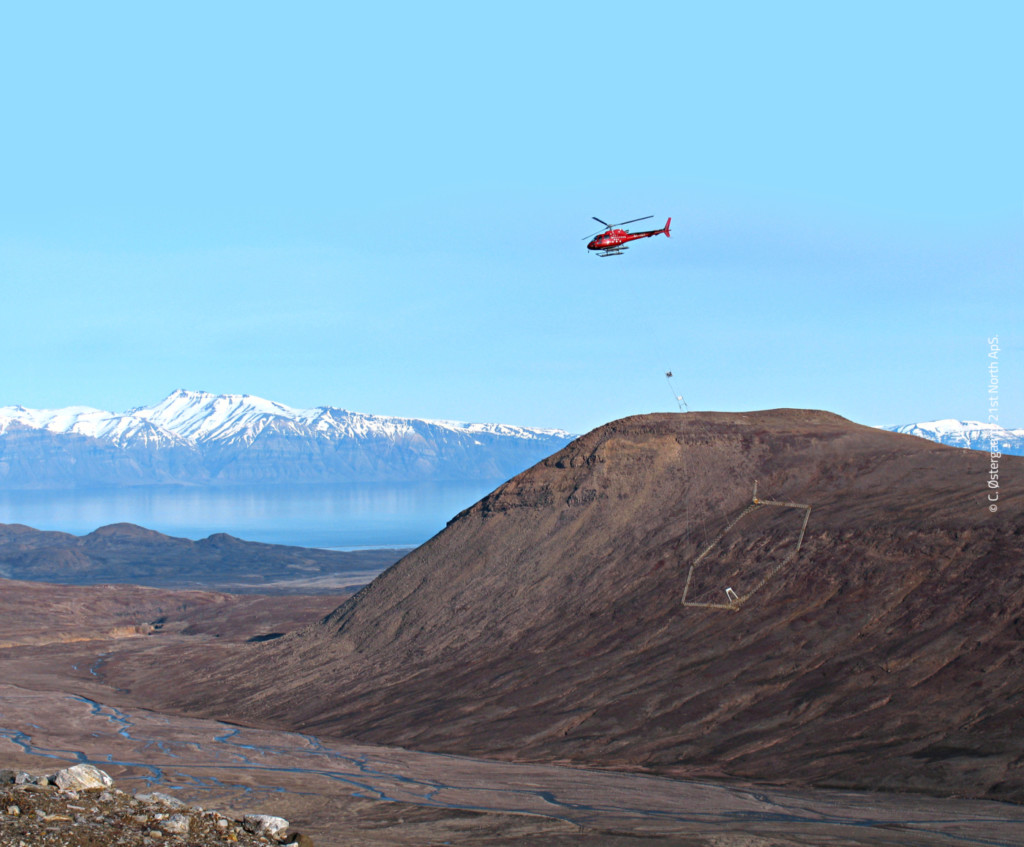
DiENT: Digital Entrepreneurial Education Portal
Project duraiton: 1 January 2018 – 31 March 2021

Objective

This proposal aims to create an international minor in functional material design for scientists (30 ECTS). A series of digital learning modules and SME-industry challenge projects will development students’ technical and I&E skills and enable students to work in virtual international teams as well as face-to-face. A novel digital portal will also be designed to enable university experts to gain I&E pedagogic skills for technical education.

The solution (technology)

An innovative digital tool, DiENT Portal, which enables implementation of an entrepreneurial approach to MSc level courses in materials science, will be developed and tested.

Three universities provide a set of three complementary master courses which apply this entrepreneurial portal to provide materials science education with an entrepreneurial approach. Students participating in these courses where the portal is used will develop an entrepreneurial mindset which will help them in all future business endeavours they will encounter in their professional life. Close contact with industry is provided by two industrial partners.

Partnership


Exploration

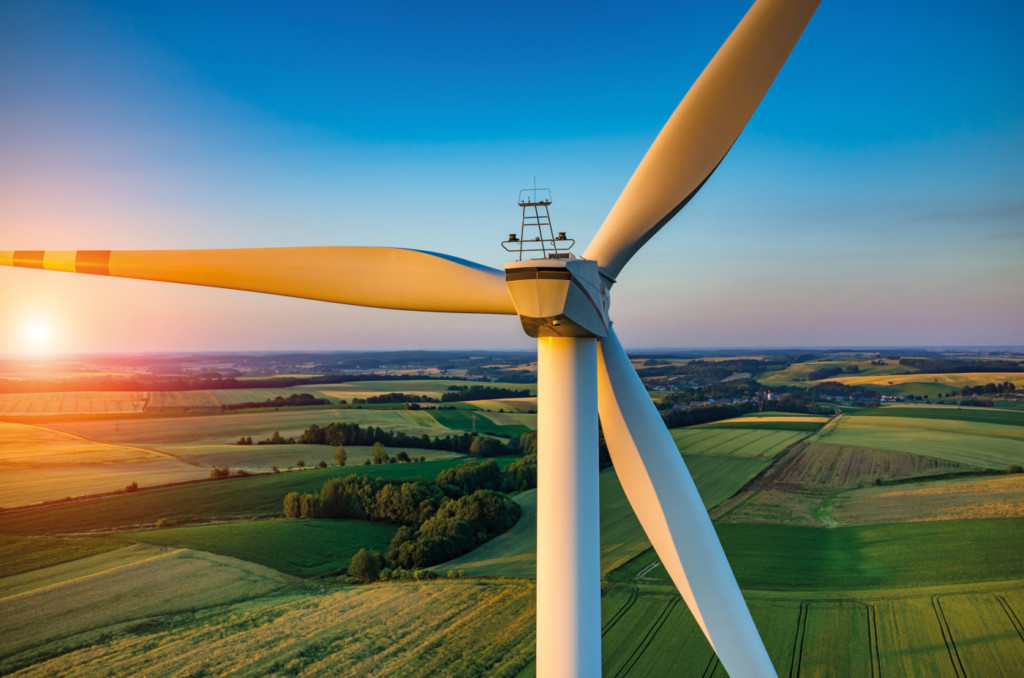
DIGISERplus. DIGISER++: DIGImet Technology SERvices for Copper Production Waste Treatment
Project duration: 1 January 2020 – 31 December 2021

Objective

The project aims at scaling up the patented DIGIMET technology for the valorization of non-ferrous solid wastes. The project technology starts at TRL5 and will reach TRL 7 through the development of the DIGISER++ demo able to valorize up to 15.000 ton/years in an operational environment. A consortium, representing the whole value chain, and a go to Market Strategy to ensure market introduction of the innovation within 2 years after the project.

The solution (technology)

The main objective of the project is to upscale and validate the DIGIMET technology for the valorisation of copper production process solid wastes. The technology is covered by two family of patents, i.e. WO2016169780 and EP15382205. The IP is protected thus full Freedom to Operate is already assessed.
The work to be done in the project will be specifically oriented to improve the waste management of a copper smelting and refining company, Atlantic Copper. A demonstrator will be developed, DIGISER++ demo furnace, with a capacity to treat up to 15.000tons/year, to implement and validate in operational environment. During the last two years, the DIGIMET technology has been validated up to TRL5 for valorisation of wastes coming from copper and tin smelting companies and now the challenge is to reach TRL7.
The project consortium includes the whole value chain for the development, validation and commercialization of the technology. TECNALIA and CEA are the technology providers to develop the technology from TRL5 to TRL7. After the two-year project and the validation milestone using ATLANTIC COPPER wastes, the development will continue during the following two years to bring the technology to its full operational capacity. DIGIMET will be the responsible of the commercialization of the technology through the Go-to-Market (GTM) assessment developed in the project. The environmental and economic impact of the application of this technology in the copper production process will be studied by ILV and all the knowledge generated will be transferred to the community and the different group of stakeholders by UGENT through innovative online training courses. According to the proposed strategy, from 2023 on DIGIMET will be able to commercialize the technology to metallurgical companies interested in improving their waste management.
Preliminary economic assessment of DIGISER++ solution performed for Atlantic Copper case shows Return Of Investment (ROI) below 3 years, confirming the interest of the technology. However, the potential impact of the innovation will not be only focused on the copper sector but also in the KIC Community in general.

Partnership

  • Atlantic Copper S.L.U., Spain
  • French Alternative Energies and Atomic Energy Commission, France
  • DIGIMET 2013 S.L., Spain
  • Ghent University, Belgium
  • IVL Swedish Environmental Research lnstitute, Sweden
  • Tecnalia Research & Innovation Foundation (Lead Partner), Spain
Circular Economy

DIM ESEE: Dubrovnik International ESEE Mining school

Project duration: 1 April 2017 – 31 December 2020

Objective
Educational activity is addressing the topics of the primary interest of the RM community: zero waste management and deep intelligent mining, both representing the strategic pillars of the EIT RawMaterials CLC East, followed by small mining sites and recycling being of high regional importance.

The solution (technology)

Educational activity is creating a new collaborative network between 7 HEI and a research institute form 8 ESEE countries, contributing to unique multidisciplinary education programme and overall synergic inter-institutional collaboration, building and de-siloing of the ESEE KIC community. The overall number of academic staff form collaborating institution exceeds 500. Educational activity has already identified 8 ESEE active mining regions of high economic importance and will attract minimum 100 industrial partners (mining and recycling companies; SME and large companies) within 4 years establishing communication, identifying a specific industrial needs, creating new partnerships and contributing to overall KIC community building. DIM ESEE partners come from two sides of the knowledge triangle: academia and research, however, critical tailoring of the DIM program will be done with industrial partners. Also, final users are industrial partners holding a third side of the knowledge triangle. The project is geographically focused on ESEE Region but also captures the aspect of internationalization because countries like Serbia and Ukraine are involved. DIM ESEE school will educate minimum 160 professionals, academicians and PhD students within 4 years, according to tailor-made topics: zero waste management; deep intelligent mining, small mining sites and recycling, potentially increasing a number of new demonstration and pilot plants/prototypes, start-ups or new (urban) mines operating in Europe. DIM ESEE school will also serve as an ideas centre/hub within the ESEE partner network increasing a number of successful matches in industrial symbiosis and potential new KIC projects, being a part of the ESEE Regional Innovation Strategy (RIS). Through communication with wider society (web-pages with information at 9 different languages) increase public awareness on environmental aspects of mining and circular economy as one of the main focus of RM community and increase public acceptance of overall mining activities.

Partnership

For more information, please visit the official website of the project.